Table of Contents
Introduction
Most industrial procurement teams don’t struggle to find a globe valve—they struggle to find one that actually performs consistently once it is installed in a real system.
In theory, a globe valve looks simple enough: a body, a disc, a stem, and a seat. But in practice, its performance is tightly linked to how well it is engineered and manufactured. That’s why the choice of a globe valve manufacturer often matters more than the valve specification itself.
In industries like oil and gas, chemical processing, power generation, and water treatment, a small inconsistency in flow control can lead to system instability, unexpected maintenance, or even downtime. This is where manufacturing discipline becomes the real differentiator.
This article takes a practical, field-oriented view of how experienced engineers and procurement teams evaluate a globe valve supplier, what actually matters during selection, and what is often overlooked in the process.
When a Globe Valve Becomes “Critical” (and When It Doesn’t)
Not every valve in a system carries the same level of responsibility.
A globe valve becomes critical when it is used for:
- Continuous throttling instead of simple on/off control
- High-temperature or high-pressure media
- Systems requiring stable flow regulation over time
- Processes where small deviations affect downstream equipment
In these situations, valve performance is not just about design—it becomes a manufacturing question.
A poorly manufactured valve may still “work” during initial testing, but issues usually appear later:
- unstable throttling behavior
- seat wear after short operation cycles
- leakage under fluctuating pressure
- inconsistent actuator response
This is why experienced buyers tend to focus less on catalog descriptions and more on how a globe valve manufacturer actually builds and tests each unit.
Manufacturer or Supplier: Why This Distinction Still Matters
In global sourcing, the terms “supplier” and “manufacturer” are often used loosely. In reality, they represent two very different risk profiles.
A true globe valve manufacturer is typically responsible for:
- raw material selection and inspection
- machining and dimensional control
- assembly process and torque control
- internal testing before shipment
- engineering adjustments for OEM orders
A trading-based globe valve supplier, on the other hand, may:
- source from multiple production facilities
- provide limited visibility into production methods
- offer less control over consistency between batches
For small projects, both models may appear similar. But for long-term industrial systems, inconsistency becomes expensive—not in purchase cost, but in operational disruption.
That is why EPC contractors and engineering teams often prefer direct manufacturing sources when possible.
What Experienced Buyers Actually Look At (Not What Catalogs Highlight)
Technical brochures tend to emphasize specifications. Field engineers tend to look for something different.
Instead of focusing only on pressure ratings or size ranges, experienced buyers usually evaluate:
1. Stability of manufacturing process
Not just capability, but repeatability across production batches.
2. Internal machining accuracy
Small deviations in seat alignment can change throttling behavior significantly.
3. Valve response consistency
Especially important in automated or semi-automated systems.
4. Documentation quality
Inspection records, material traceability, and test reports matter more than marketing claims.
5. Engineering communication
A manufacturer that can discuss application conditions often indicates deeper technical control.
These factors are not always visible in product listings, which is why evaluating a globe valve manufacturer requires looking beyond surface-level specifications.
Inside a Globe Valve Manufacturing Workflow (What Actually Affects Performance)
Although globe valves appear simple externally, their performance depends heavily on internal process control.
A typical production flow includes:
Material preparation and verification
Before anything is machined, materials are checked for consistency and suitability for pressure and temperature conditions.
Forming process (casting or forging)
This step determines the structural integrity of the valve body under stress conditions.
Precision machining
This is where sealing performance is essentially “decided.” Even minor inaccuracies can affect long-term leakage behavior.
Assembly under controlled conditions
Stem alignment, disc positioning, and seat fitting all contribute to flow stability.
Final testing stage
This is where manufacturers simulate operational conditions to ensure reliability before shipment.
What separates a strong globe valve supplier from an average one is not the presence of these steps—but how strictly they are controlled.
Why Globe Valve Performance Varies So Much in Real Systems
One of the most overlooked issues in industrial piping systems is performance deviation between “identical” valves.
Two valves with the same specification can behave differently due to:
- micro-level machining differences
- seat material variation
- surface finishing quality
- assembly tolerance accumulation
This is why some systems experience stable operation for years, while others require frequent adjustment or replacement.
In most cases, the root cause is not design—it is manufacturing consistency.
Common Application Environments Where Selection Becomes Critical
Globe valves are widely used, but not all applications are equally forgiving.
In the following environments, manufacturer selection becomes especially important:
- Steam distribution and regulation systems
- Corrosive chemical transfer pipelines
- High-pressure energy systems
- Continuous flow control in processing plants
- Industrial water circulation systems
In these environments, small performance deviations are amplified over time. A stable globe valve manufacturer helps reduce that variability at the source.
A Practical Way to Evaluate a Globe Valve Supplier (Used by Procurement Teams)
Instead of relying on marketing claims, experienced buyers often use a more practical evaluation approach:
- Request detailed manufacturing process explanation
- Review inspection and testing procedures
- Check consistency across product batches
- Evaluate responsiveness to technical questions
- Assess ability to support customization requests
A capable manufacturer usually responds with technical clarity rather than general statements.
A less experienced globe valve supplier often relies on generic descriptions without engineering depth.
Why Direct Manufacturing Sources Are Increasingly Preferred
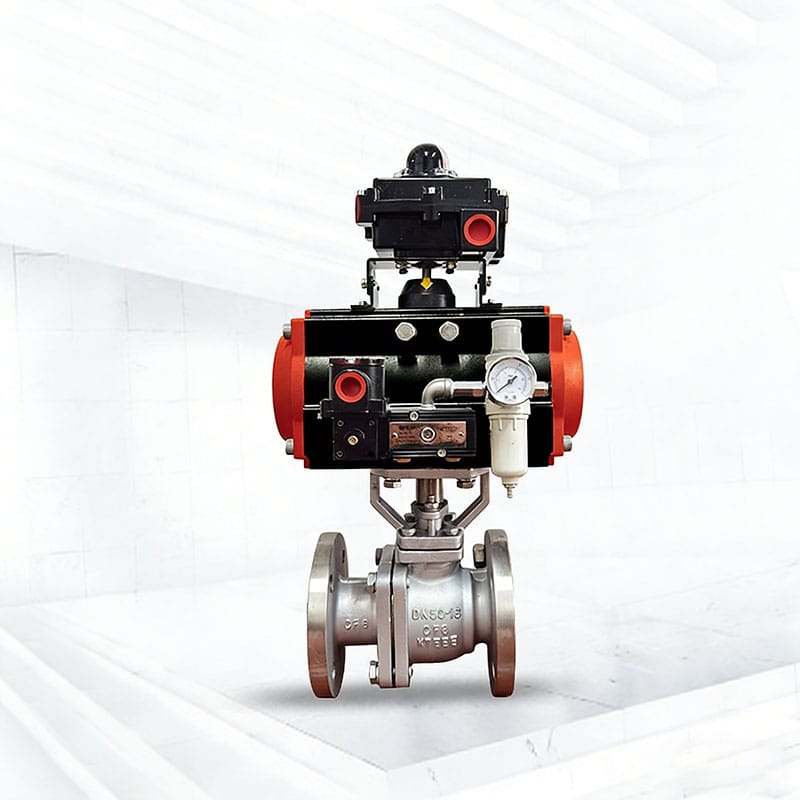
Across global industrial procurement trends, there is a clear shift toward direct factory sourcing.
The reasons are practical:
- fewer communication layers
- better control over specifications
- more stable production planning
- stronger engineering alignment
- reduced risk of inconsistent supply
In large-scale projects, stability often matters more than flexibility. That is why direct engagement with a globe valve manufacturer has become standard practice in many industries.
Conclusion
Choosing a reliable globe valve manufacturer is less about comparing product catalogs and more about understanding how valves are actually produced, tested, and controlled before they reach a pipeline system.
A dependable manufacturer is not defined by claims, but by consistency—how every valve performs under real operating conditions, across time, pressure changes, and system demands.
For industrial buyers, the most effective approach is to focus on manufacturing capability, quality control discipline, and technical transparency rather than surface-level specifications.
In the long run, this approach does more than reduce procurement risk—it directly contributes to system stability, operational safety, and maintenance efficiency across the entire pipeline network.
FAQ
Q1: What is a globe valve used for in industrial systems?
A globe valve is mainly used for regulating and throttling fluid flow in pipelines, especially in systems that require precise flow control rather than simple on/off operation.
Q2: What is the difference between a globe valve manufacturer and a supplier?
A globe valve manufacturer produces valves directly in the factory with full control over materials, machining, and testing, while a supplier may source products from different factories and offer limited production control.
Q3: How do I choose a reliable globe valve manufacturer?
Focus on manufacturing capability, quality control processes, certifications, material traceability, and whether the manufacturer can provide consistent product performance across batches.
Q4: Why is quality control important in globe valve production?
Because even small machining or assembly variations can affect sealing performance, flow stability, and long-term reliability in industrial pipeline systems.
Q5: In which industries are globe valves commonly used?
Globe valves are widely used in oil and gas, chemical processing, power generation, water treatment, and HVAC systems where stable flow regulation is required.