In industrial automation, a valve is not just a pipeline accessory. It is often the final control element that directly affects flow stability, production safety, energy efficiency, and product quality. For plants handling steam, gas, water, oil, chemical media, or process fluids, choosing the right pneumatic control valve can determine whether a system runs smoothly or faces repeated instability, leakage, vibration, and maintenance shutdowns.
A pneumatic control valve uses compressed air to move the actuator and adjust the valve opening. Compared with manual valves, it supports automated regulation. Compared with some electric solutions, it is often preferred in demanding industrial environments where fast response, simple actuation, strong reliability, and compatibility with process control systems are required.
However, buyers should not select a pneumatic control valve only by pipe size or pressure rating. A reliable selection needs to consider process medium, temperature, pressure drop, flow characteristics, actuator type, valve body design, leakage requirement, control accuracy, installation space, and maintenance conditions.
This guide explains how to select a pneumatic control valve from an engineering and procurement perspective, especially for industrial projects that require long-term stability rather than a short-term replacement.
Table of Contents
What Is a Pneumatic Control Valve?
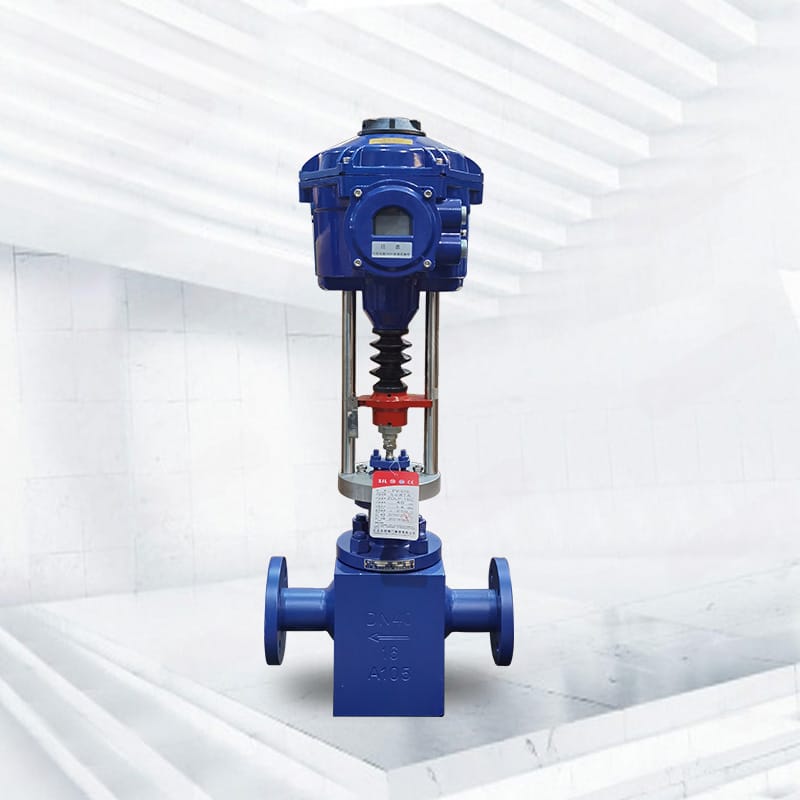
A pneumatic control valve is an automated valve that uses air pressure to drive an actuator, which moves the valve stem, plug, ball, or disc to regulate flow. It can control process variables such as flow rate, pressure, temperature, or liquid level by changing the valve opening according to a control signal.
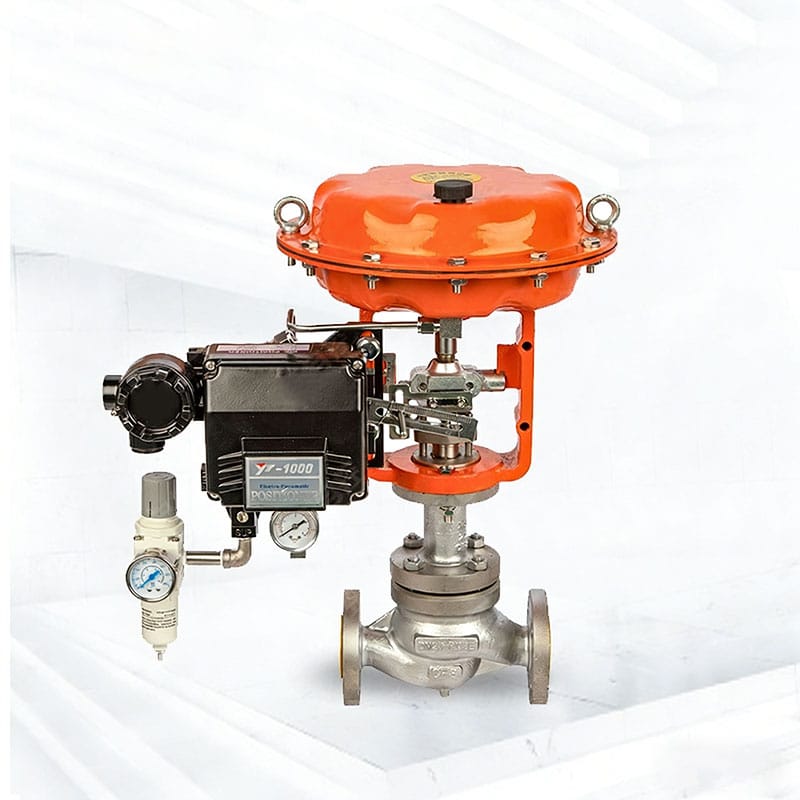
In a typical industrial system, a pneumatic control valve may work together with a controller, positioner, actuator, air filter regulator, solenoid valve, limit switch, and other accessories. When the controller sends a signal, the positioner adjusts air pressure to the actuator, and the actuator moves the valve to the required position.
For buyers who are comparing different valve options, Phileda’s control valve product range can be used as a reference for common industrial valve categories, including pneumatic control valves, electric control valves, butterfly valves, ball valves, shut-off valves, and self-operated control valves.
Why Pneumatic Control Valves Are Still Widely Used
Even as electric automation becomes more common, pneumatic control valves remain highly important in process industries. One major reason is their balance between response speed, mechanical simplicity, and dependable operation.
Pneumatic actuation is especially suitable for plants that already have compressed air systems. In many chemical, petrochemical, power, water treatment, metallurgy, paper, and pharmaceutical facilities, instrument air is already available, making pneumatic valves practical for large-scale automation.
Another reason is safety. In some applications, a pneumatic actuator can be configured to fail open, fail closed, or fail in place depending on the required process safety logic. This makes it useful for systems where the valve position during air failure must be predictable.
Common advantages include:
| Selection Factor | Why It Matters in Industrial Projects |
|---|---|
| Fast response | Helps stabilize flow, pressure, and temperature changes |
| Simple actuator structure | Reduces complexity in many plant environments |
| Fail-safe options | Supports process safety requirements |
| Strong compatibility | Works with positioners, solenoid valves, and control systems |
| Suitable for harsh conditions | Can be configured for high temperature, corrosive, or high-pressure service |
| Maintenance practicality | Many parts are accessible and serviceable |
For high-temperature service, a product such as the pneumatic diaphragm high temperature control valve is designed for steam, heat transfer oil, and high-temperature gas systems where stable regulation is more important than simple on/off operation.
Start With the Process Conditions, Not the Valve Size
A common mistake in valve procurement is starting with the pipeline diameter. Pipe size is important, but it should not be the first selection basis. A pneumatic control valve must be sized according to the real process conditions.
Before selecting the valve, the engineering team should collect:
| Required Information | Why It Is Needed |
| Medium type | Determines material, sealing, corrosion resistance, and flow behavior |
| Normal, minimum, and maximum flow | Helps select the correct flow capacity |
| Inlet and outlet pressure | Determines pressure drop and valve sizing |
| Operating temperature | Affects body material, packing, seat, and actuator accessories |
| Required control range | Helps avoid oversized or undersized valves |
| Shut-off requirement | Determines leakage class and sealing structure |
| Installation position | Affects actuator orientation, maintenance space, and piping stress |
| Control signal | Determines positioner and automation accessories |
| Failure position | Supports safety logic during air or signal failure |
A pneumatic control valve should be selected to regulate effectively under normal operation, not only survive maximum conditions. If the valve is oversized, it may operate too close to the closed position, causing poor control resolution, hunting, vibration, and seat wear. If it is undersized, it may fail to deliver the required flow under peak conditions.
For general control valve sizing principles, buyers can refer to the ISA control valve sizing standards committee, which focuses on flow equations for sizing control valves.
Choose the Right Valve Body Type
The valve body determines how the medium passes through the valve and how accurately the valve can regulate flow. Different valve body structures are suitable for different applications.
A single-seat pneumatic control valve is often used where precise regulation and good sealing are required. The HTS single seat pneumatic control valve is an example of a valve designed for continuous control of flow rate, pressure, temperature, and liquid level in industrial pipelines.
A V-port pneumatic control ball valve is often chosen when the project requires both regulation and reliable shut-off. The V-shaped ball opening provides a more controlled flow path than a standard full-port ball valve. For applications where flow control and shut-off are both important, the pneumatic V port control ball valve can be a useful option.
Butterfly-type pneumatic valves are often used in larger pipelines, especially where compact structure, fast opening and closing, and lower weight are important. For medium and low-pressure pipeline automation, a wafer type pneumatic actuated butterfly valve may be suitable.
| Valve Type | Typical Advantage | Common Application |
| Single-seat pneumatic control valve | Accurate regulation and good sealing | Steam, gas, water, chemical process control |
| Pneumatic diaphragm control valve | Stable response and mature structure | High-temperature or continuous regulation systems |
| V-port pneumatic control ball valve | Regulation plus shut-off ability | Flow control, pressure control, automation pipelines |
| Pneumatic actuated butterfly valve | Compact structure and fast operation | Large-diameter medium or low-pressure systems |
The best choice depends on the process target. If the goal is precise continuous modulation, a control valve body should be prioritized. If the goal is frequent on/off operation with automation, a pneumatic actuated shut-off or butterfly valve may be more appropriate.
Match the Actuator to the Control Duty
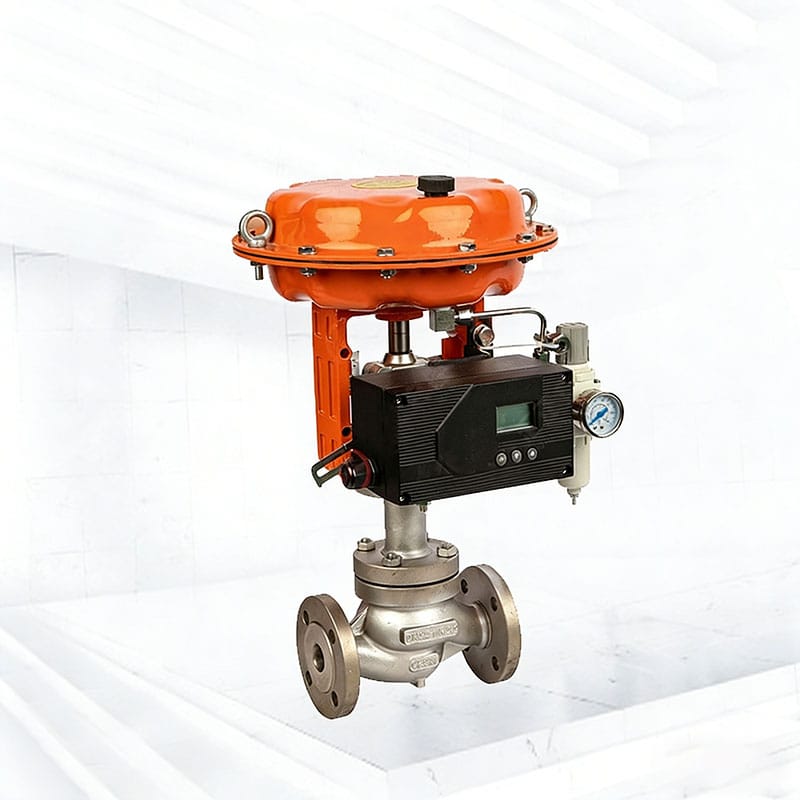
The actuator converts air pressure into mechanical movement. For pneumatic control valves, actuator selection directly affects response speed, thrust, stability, and fail-safe behavior.
Common actuator types include pneumatic diaphragm actuators and pneumatic piston actuators. Diaphragm actuators are widely used for modulating control because they offer smooth movement and stable response. Piston actuators can provide higher output force and may be selected for larger valves, high-pressure drops, or demanding shut-off requirements.
When evaluating the actuator, consider:
| Actuator Requirement | Practical Selection Question |
| Output force | Can the actuator move the valve under maximum pressure drop? |
| Response speed | Does the process require quick correction? |
| Fail-safe action | Should the valve fail open, fail closed, or stay in position? |
| Control mode | Is the valve for on/off control or continuous modulation? |
| Air supply condition | Is instrument air stable, clean, and dry? |
| Accessory compatibility | Does the actuator support positioners, limit switches, and solenoid valves? |
A pneumatic control valve used for flow regulation normally requires a positioner. The positioner improves valve positioning accuracy by comparing the control signal with the actual valve position and adjusting air pressure to the actuator.
For buyers, this means the valve should not be evaluated as a single metal body only. The actuator and accessory package are part of the complete control solution.
Understand Flow Characteristics Before Ordering
Flow characteristic describes how flow changes as the valve opens. Selecting the wrong characteristic can cause unstable control even if the valve size and material are correct.
The most common flow characteristics include linear, equal percentage, and quick opening.
| Flow Characteristic | How It Behaves | Best Used For |
| Linear | Flow changes evenly with valve travel | Stable pressure drop systems |
| Equal percentage | Flow change increases gradually as the valve opens | Systems with changing pressure drop |
| Quick opening | Large flow change at small opening | On/off or fast filling applications |
For many industrial control applications, equal percentage is commonly selected because pressure drop across the valve often changes during operation. Linear characteristics may work well when system pressure conditions are stable. Quick opening is generally not preferred for precise modulation.
A buyer should confirm the required flow characteristic before production, especially for steam, chemical dosing, temperature control, or pressure regulation applications.
Material Selection: Body, Trim, Seat, and Packing
Material selection affects service life, corrosion resistance, sealing reliability, and maintenance frequency. A pneumatic control valve used in clean water does not need the same material package as one used in corrosive chemical media, high-temperature steam, or abrasive slurry.
Important material areas include:
| Valve Part | Selection Focus |
| Body | Pressure, temperature, corrosion resistance, process compatibility |
| Trim | Erosion resistance, cavitation resistance, flow control stability |
| Seat | Leakage requirement, temperature resistance, media compatibility |
| Packing | Temperature, emission control, stem sealing reliability |
| Gasket | Chemical compatibility and pressure sealing |
| Coating or surface treatment | Abrasion or corrosion resistance in severe service |
For general industrial valve design and pressure-temperature considerations, ASME B16.34 is a useful external reference because it covers pressure-temperature ratings, dimensions, tolerances, materials, testing, and marking for valves.
Material should never be chosen only by price or standard availability. A cheaper body or sealing material may cause leakage, corrosion, shutdown, or safety problems if it is not suitable for the actual medium.
Pressure Drop, Cavitation, Flashing, and Noise
Many pneumatic control valve problems happen because the pressure drop was not properly analyzed. When pressure drop is too high, the valve may face cavitation, flashing, noise, vibration, erosion, or unstable flow.
Cavitation can occur in liquid service when pressure falls below vapor pressure and then recovers, causing vapor bubbles to collapse. This can damage trim surfaces and create severe noise. Flashing occurs when part of the liquid changes into vapor and remains vapor downstream. In gas or steam service, high pressure drop can create excessive velocity and noise.
Signs of poor pressure drop selection may include:
| Problem | Possible Cause |
| Loud noise | High velocity, cavitation, flashing, or turbulence |
| Valve vibration | Oversizing, unstable pressure drop, or poor piping support |
| Seat damage | Cavitation, erosion, or frequent throttling near closed position |
| Poor control | Valve operating outside effective travel range |
| Short packing life | Stem vibration or high-temperature stress |
For demanding applications, buyers should provide full operating data and ask the manufacturer to confirm whether a standard trim is enough or whether special trim, multi-stage pressure reduction, hardened material, or anti-cavitation design is needed.
Pneumatic Control Valve vs Electric Control Valve
Many buyers compare pneumatic control valves with electric control valves during project planning. The correct choice depends on site conditions, control requirements, safety logic, and available utilities.
| Comparison Point | Pneumatic Control Valve | Electric Control Valve |
| Power source | Compressed air | Electricity |
| Response | Usually fast | Depends on actuator type |
| Fail-safe configuration | Strong options with spring return | Possible, but may require battery or special actuator |
| Installation environment | Suitable for many industrial plants with instrument air | Useful where air supply is unavailable |
| Maintenance | Mechanical and air system maintenance | Electrical actuator and wiring maintenance |
| Control accessories | Positioner, regulator, solenoid valve, limit switch | Electric actuator, controller, signal module |
| Best fit | Process plants, frequent control, safety-oriented systems | Remote sites, digital automation, low air infrastructure |
If the project already has stable instrument air and requires fast, reliable control, a pneumatic control valve is often practical. If the site lacks compressed air or requires remote electric integration, an electric valve may be preferred. For comparison, buyers can also review electric control valve options when evaluating automation methods.
Application Scenarios Where Pneumatic Control Valves Perform Well
Pneumatic control valves are used in a wide range of industrial systems. The best applications are those requiring stable regulation, fast actuator response, and dependable fail-safe behavior.
Typical applications include:
| Industry | Typical Control Duty |
| Chemical processing | Flow control, pressure control, dosing, reaction temperature regulation |
| Power generation | Steam control, condensate control, cooling water control |
| Petrochemical | Gas, oil, and process fluid regulation |
| Water treatment | Flow balancing, pressure control, automated pipeline regulation |
| Paper manufacturing | Steam, water, pulp-related process control |
| Pharmaceutical production | Utility systems, clean process media, pressure control |
| Metallurgy | Cooling water, gas control, high-temperature auxiliary systems |
For plants in these industries, the key is not simply buying a valve that fits the flange. The valve must match the control loop, medium behavior, process risk, and maintenance plan.
Practical Buyer Checklist Before Confirming an Order
Before placing an order for a pneumatic control valve, buyers should confirm technical details with the manufacturer. This avoids incorrect sizing and reduces communication gaps during production.
Use this checklist:
| Checklist Item | Confirmed |
| Medium name and composition | |
| Normal, minimum, and maximum flow | |
| Inlet pressure and outlet pressure | |
| Operating temperature range | |
| Pipeline size and connection standard | |
| Required pressure rating | |
| Valve body material | |
| Trim and seat material | |
| Required leakage level | |
| Flow characteristic | |
| Actuator type and fail-safe position | |
| Control signal and positioner requirement | |
| Accessories such as solenoid valve or limit switch | |
| Installation direction and available space | |
| Required inspection or testing documents |
For industrial projects, it is better to provide a process data sheet instead of only sending a valve name. A professional manufacturer can then check whether the selected pneumatic control valve is suitable for the actual duty.
Inspection, Testing, and Documentation
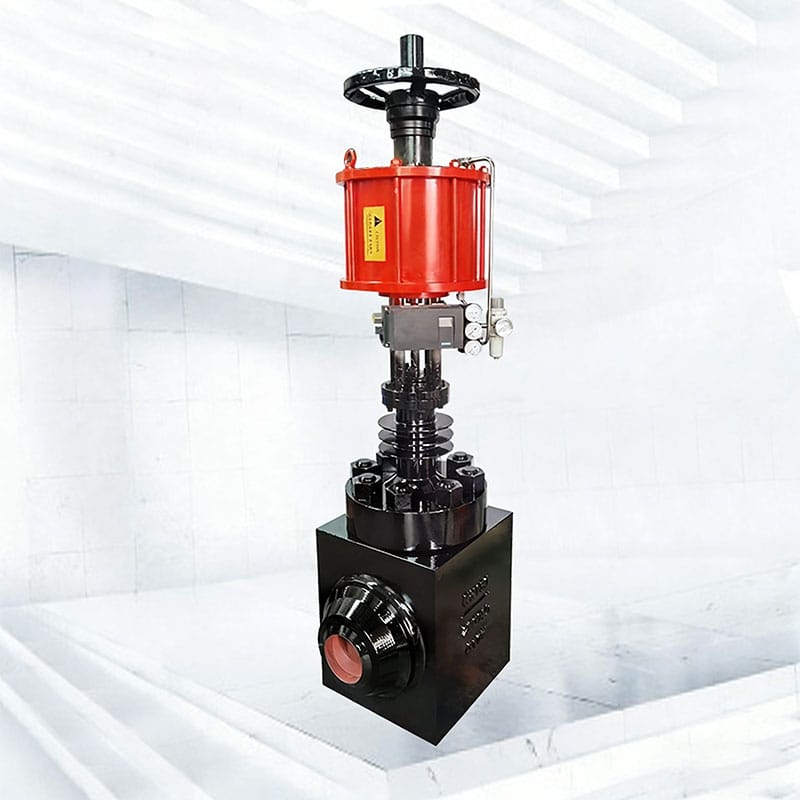
Reliable valve procurement should include inspection and testing expectations. Depending on the industry and project, buyers may require pressure testing, seat leakage testing, material certificates, dimensional inspection, functional testing, actuator calibration, and final quality documentation.
For general valve inspection and pressure testing, API 598 is widely referenced in industrial valve procurement. While the exact standard depends on valve type and project requirements, buyers should clearly define inspection expectations before production.
Important documents may include:
| Document | Why It Matters |
| Technical drawing | Confirms dimensions, connection, and actuator orientation |
| Material certificate | Verifies material compliance |
| Pressure test report | Confirms shell and sealing performance |
| Calibration report | Supports control accuracy verification |
| Packing list | Helps receiving and installation teams |
| Operation manual | Supports commissioning and maintenance |
For international projects, documentation quality is often as important as manufacturing quality. Clear documentation reduces installation mistakes, site delays, and after-sales disputes.
Common Selection Mistakes to Avoid
Many pneumatic control valve problems are preventable. The following mistakes are common in procurement and engineering communication.
First, selecting by pipe size only. A valve that matches the pipe diameter may still be oversized for actual control duty.
Second, ignoring minimum flow. A valve may work at maximum flow but perform poorly at low flow if it cannot regulate within a stable travel range.
Third, using the wrong seat or packing material. High temperature, corrosive media, or abrasive service requires careful material matching.
Fourth, forgetting fail-safe position. In a shutdown or air failure condition, the valve position must match process safety requirements.
Fifth, treating accessories as optional. For accurate control, positioners, air filter regulators, solenoid valves, and limit switches may be necessary.
Sixth, not confirming installation conditions. Valve orientation, actuator space, maintenance access, and pipeline stress can all affect performance.
Seventh, choosing a supplier without engineering support. Pneumatic control valves are technical products. A supplier should be able to discuss process conditions, not only quote a model number.
Why Work With a Control Valve Manufacturer Instead of Only a Trader?
For standard valves, some buyers may source through general distributors. But for a pneumatic control valve used in industrial automation, manufacturer support can be more valuable.
A manufacturer can help review process parameters, recommend valve body structure, confirm actuator thrust, select trim and seat materials, and provide technical drawings. This is especially important for high temperature, high pressure, corrosive, or non-standard conditions.
Phileda provides industrial automatic control valve solutions and supports product categories such as pneumatic control valves, electric control valves, ball valves, butterfly valves, shut-off valves, and self-operated control valves. For projects that require customized valve selection, buyers can also contact the engineering team with process data for technical confirmation.
A Practical Example: Steam Temperature Control in a Processing Plant
Consider a processing plant that needs to regulate steam flow into a heat exchanger. The buyer initially plans to order a valve based only on the existing pipe size. However, the steam pressure varies during operation, the required flow changes between startup and normal production, and the site requires the valve to close during air failure.
In this case, the correct selection process should include:
| Step | Engineering Decision |
| Define medium | Steam |
| Confirm temperature and pressure | Determines body, packing, and pressure rating |
| Calculate flow range | Prevents oversizing |
| Check pressure drop | Identifies noise or erosion risk |
| Select valve type | Pneumatic control valve for modulation |
| Select actuator | Fail-close pneumatic actuator |
| Add positioner | Improves control accuracy |
| Confirm documentation | Test report and technical drawing for site approval |
If the valve is selected correctly, it can regulate steam more smoothly, reduce temperature fluctuation, and support safer operation. If it is selected only by pipe size, the plant may face unstable control, noise, seat wear, or frequent adjustment problems.
Maintenance Tips for Longer Service Life
A pneumatic control valve should be maintained as part of the control loop, not as an isolated mechanical part. Good maintenance improves control accuracy and reduces unexpected downtime.
Recommended maintenance points include:
| Maintenance Area | What to Check |
| Air supply | Clean, dry, stable instrument air |
| Positioner | Calibration, feedback linkage, signal response |
| Actuator | Diaphragm or piston condition, spring performance |
| Packing | Leakage, friction, temperature damage |
| Valve stem | Smooth movement, no bending or sticking |
| Seat and trim | Erosion, corrosion, leakage |
| Accessories | Solenoid valve, limit switch, regulator function |
| Pipeline | Vibration, support, thermal stress |
If valve response becomes slow, unstable, or noisy, the problem may not always be the valve body. It may come from air supply contamination, positioner calibration, actuator leakage, or control loop tuning.
How to Send an Inquiry for Faster Technical Selection
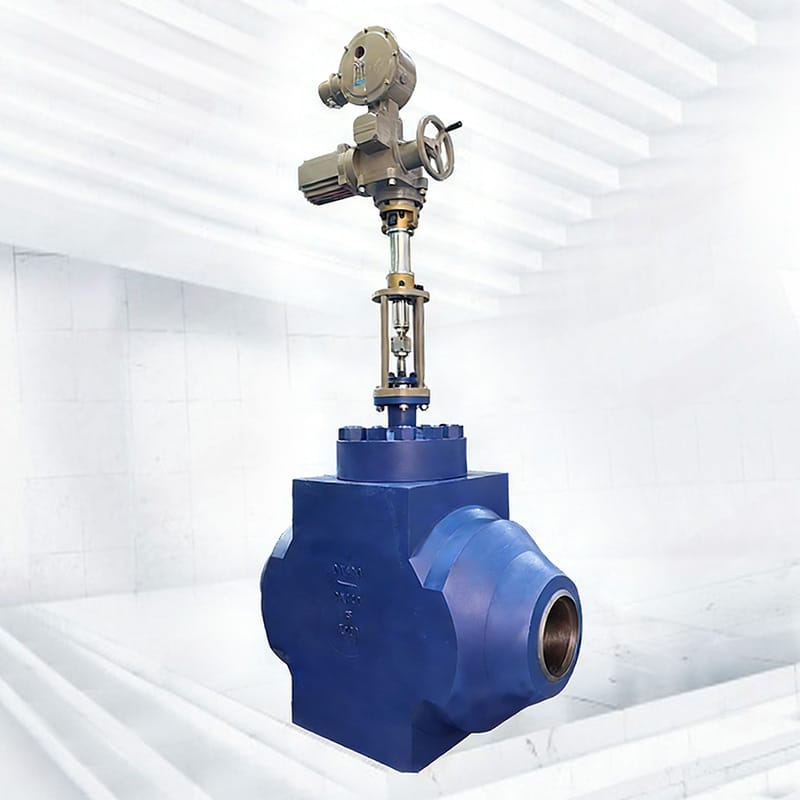
To get a more accurate pneumatic control valve recommendation, buyers should send more than a product name. A complete inquiry helps the manufacturer provide a better selection and avoids repeated communication.
A useful inquiry should include:
| Inquiry Detail | Example Format |
| Medium | Water, steam, natural gas, chemical liquid |
| Flow rate | Normal / minimum / maximum |
| Pressure | Inlet pressure and outlet pressure |
| Temperature | Normal and maximum |
| Pipe size | DN or NPS |
| Connection | Flanged, welded, threaded, wafer |
| Material preference | Carbon steel, stainless steel, special alloy |
| Control signal | 4–20 mA, pneumatic signal, on/off |
| Failure position | Fail open, fail closed, fail in place |
| Application | Flow, pressure, temperature, or level control |
The more complete the information, the more accurately the manufacturer can select the valve body, actuator, accessories, and material package.
Conclusion
A pneumatic control valve is a critical part of industrial automation. It does more than open or close a pipeline. It regulates process conditions, supports production stability, protects equipment, and helps the control system respond to real operating changes.
The best selection starts with process data, not only valve size. Buyers should evaluate medium type, pressure drop, flow range, temperature, control accuracy, actuator duty, material compatibility, leakage requirements, and inspection standards. For demanding industrial systems, working directly with an experienced control valve manufacturer can reduce selection risk and improve long-term reliability.
If your project requires stable flow, pressure, temperature, or level control, review the available control valve products or contact Phileda to discuss a pneumatic control valve solution based on your actual process conditions.
FAQ
What is a pneumatic control valve used for?
A pneumatic control valve is used to regulate flow, pressure, temperature, or liquid level in industrial pipelines by using compressed air to move the actuator.
How do I choose the right pneumatic control valve?
Start with medium type, flow range, pressure, temperature, pressure drop, leakage requirement, actuator type, fail-safe position, and control signal.
Is a pneumatic control valve better than an electric control valve?
It depends on the project. Pneumatic valves are often preferred where instrument air is available, fast response is needed, and fail-safe operation is important.
What information should I provide when requesting a valve quote?
Provide medium, flow rate, inlet and outlet pressure, temperature, pipe size, connection type, material requirement, control signal, and failure position.
Can pneumatic control valves handle high-temperature media?
Yes, but the valve must be designed with suitable body material, packing, trim, actuator configuration, and sealing structure for the temperature condition.
Why does valve sizing matter?
Correct sizing helps the valve operate within a stable control range. Poor sizing can cause hunting, noise, vibration, leakage, or poor process control.
What accessories are commonly used with pneumatic control valves?
Common accessories include positioners, air filter regulators, solenoid valves, limit switches, boosters, and manual override devices.
When should I contact a manufacturer for technical selection?
You should contact a manufacturer when the application involves high temperature, high pressure, corrosive media, strict leakage requirements, or non-standard automation needs.