Table of Contents
Introduction
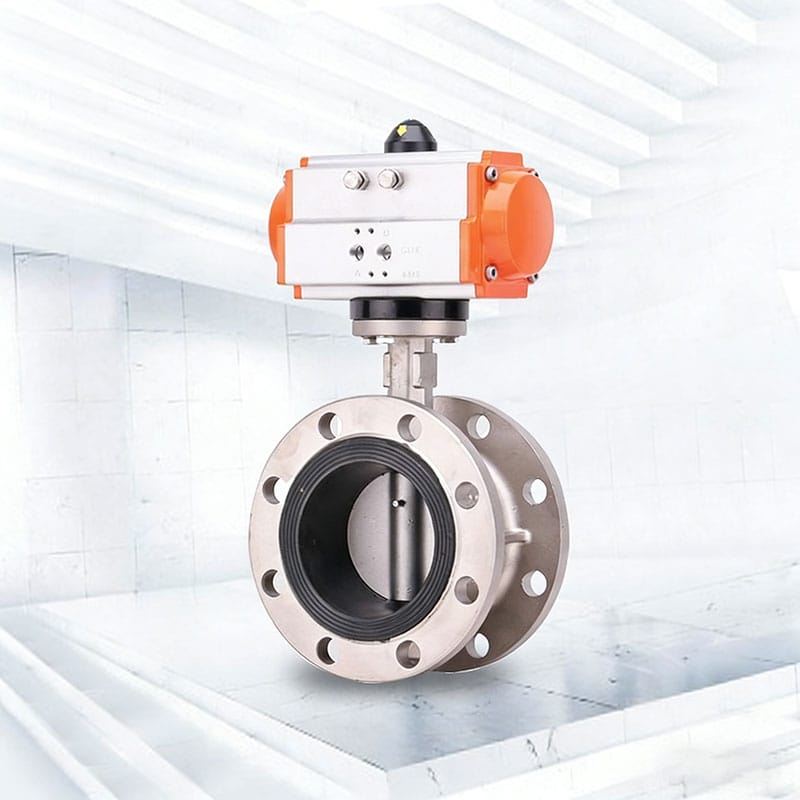
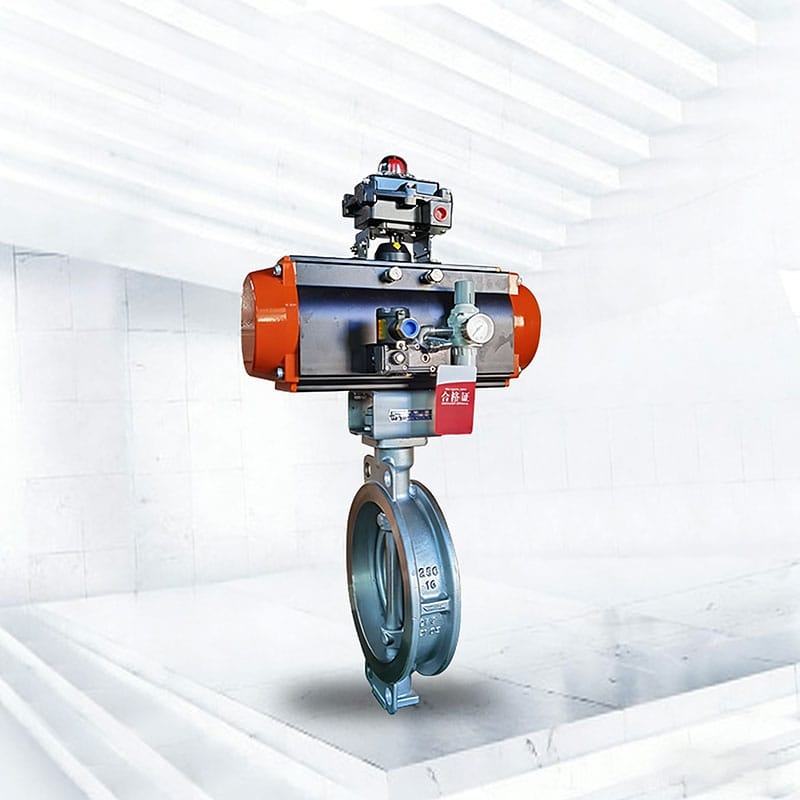
Air actuated butterfly valves, also known as pneumatic butterfly valves, are essential components in modern fluid control systems. These valves utilize compressed air to control the opening and closing of a disc-shaped butterfly plate, which rotates within the pipeline to regulate or cut off fluid flow. In industrial settings, they play a critical role in automating process control, ensuring efficient operation, and maintaining system safety.
The importance of air actuated butterfly valves in industrial fluid control systems cannot be overstated. Unlike manual butterfly valves that require human intervention, pneumatic butterfly valves offer remote control capabilities, enabling automated operation from a central control room. This automation reduces labor costs, improves response times, and enhances overall system reliability.
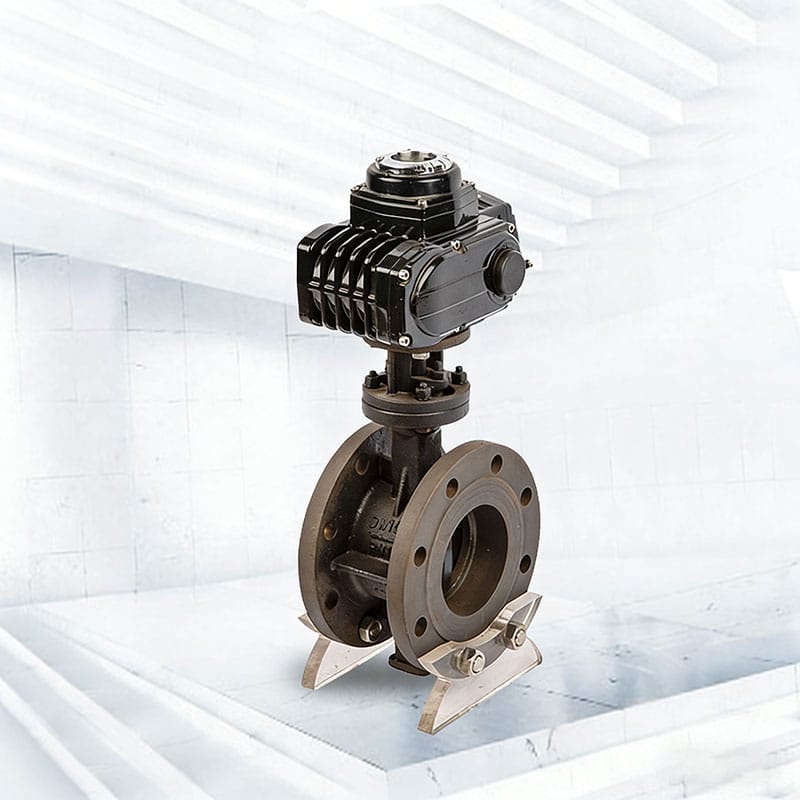
When comparing air actuated butterfly valves with manual and electric butterfly valves, several key differences emerge. Manual valves are the most economical option but lack automation features. Electric butterfly valves provide automation capabilities but typically have slower response times compared to pneumatic systems. Air actuated butterfly valves strike an optimal balance, offering fast operation, reliability, and cost-effectiveness, making them particularly suitable for water treatment applications where quick response times and fail-safe operation are essential.
How Air Actuated Butterfly Valves Work
The working principle of pneumatic butterfly valves is based on converting compressed air energy into mechanical motion. A pneumatic actuator mounted on the valve shaft receives air pressure signals from a control system. This pressure drives a piston or diaphragm within the actuator, which then converts linear motion into rotational motion, causing the valve disc to rotate 90 degrees around its axis.
There are two primary types of actuators used in air actuated butterfly valves: single acting and double acting actuators. Single acting actuators use air pressure to open or close the valve and rely on an internal spring to return the valve to its original position when air pressure is removed. This spring-return feature provides fail-safe operation, automatically closing or opening the valve during air or power failures—a critical safety feature in hazardous environments. Double acting actuators, on the other hand, require air pressure for both opening and closing operations, providing precise control but without automatic fail-safe functionality.
The integration of the actuator with the valve is straightforward yet engineered for reliability. The actuator is directly coupled to the valve stem using a mounting bracket and square drive connection. Position indicators and limit switches can be added to provide visual confirmation and electrical feedback of the valve position. For modulating control applications, positioners can be installed to achieve precise flow regulation by matching valve position to a 4-20mA control signal.
Key Features of Industrial Air Actuated Butterfly Valves
Industrial air actuated butterfly valves are engineered with specific features to meet demanding operational requirements. One of the most critical considerations is material selection. These valves are commonly manufactured from stainless steel, cast iron, carbon steel, and ductile iron, depending on the application’s corrosion resistance and strength requirements. Stainless steel valves offer excellent corrosion resistance for aggressive chemical environments, while cast iron provides cost-effective solutions for general water treatment applications.
Air actuated butterfly valves are available in three main connection types: wafer type, lug type, and flanged type. Wafer type valves are designed to fit between two pipe flanges, making them lightweight and cost-effective for space-constrained installations. Lug type valves feature threaded inserts that allow bolts to secure the valve directly to pipe flanges, providing easier maintenance access. Flanged type valves have integral flanges on both sides of the valve body, offering robust connections suitable for high-pressure applications.
Pressure ratings and temperature ranges vary based on valve design and construction materials. Standard industrial pneumatic butterfly valves typically handle pressure ratings from PN10 to PN40, with some specialized designs capable of handling pressures up to PN100. Temperature capabilities range from -40°C for cryogenic applications to over 400°C for high-temperature steam service, depending on seal material selection.
Corrosion resistance and durability are paramount in water treatment applications where valves are exposed to aggressive chemicals and varying pH levels. Advanced coating technologies, including epoxy powder coating, nickel plating, and PTFE lining, provide additional protection against corrosion. High-quality sealing materials such as EPDM, NBR, Viton, and PTFE ensure reliable operation across different chemical environments while maintaining excellent sealing performance over extended service periods.
Advantages of Using Air Actuated Butterfly Valves in Water Treatment
The adoption of air actuated butterfly valves in water treatment facilities offers numerous advantages that contribute to improved operational efficiency and reduced lifecycle costs. Fast operation and remote control capabilities stand out as primary benefits. Pneumatic actuators can complete opening or closing cycles in as little as 0.05 seconds, enabling rapid response to process changes and emergency shutdown situations. This fast operation, combined with remote control capabilities, allows operators to manage multiple valves from a central control room, reducing the need for personnel to physically access valves throughout the facility.
Reduced manual labor and improved safety represent significant advantages. By automating valve operation, facilities can minimize the risks associated with manual valve operation, particularly in hazardous environments or difficult-to-access locations. Air actuated butterfly valves eliminate the physical exertion required to operate large manual valves, reducing operator fatigue and the potential for workplace injuries. Furthermore, the fail-safe features of single acting actuators enhance safety by automatically moving valves to safe positions during air or power failures, protecting equipment and personnel.
High reliability and low maintenance requirements make air actuated butterfly valves cost-effective solutions. These valves have fewer moving parts compared to other valve types, reducing the likelihood of mechanical failure. The simple design and robust construction ensure long service life, even in demanding water treatment environments. Regular maintenance typically involves inspecting seals, lubricating moving parts, and replacing worn components—tasks that can be performed quickly and with minimal downtime.
Cost efficiency over time is achieved through several factors. The initial investment in pneumatic butterfly valves is often lower than electric actuators of similar capacity. Operating costs are minimized due to the energy efficiency of compressed air systems, which typically consume less power than electric actuators. Extended service intervals and reduced repair requirements further contribute to lower total cost of ownership, making air actuated butterfly valves an economically sound choice for water treatment applications.
Typical Applications in Water Treatment Plants
Air actuated butterfly valves find extensive use throughout water treatment facilities, serving critical functions in various treatment stages. Wastewater flow control is one of the most common applications, where these valves regulate influent and effluent flows, maintain optimal hydraulic conditions in treatment tanks, and control flow between different treatment units. Their fast response times enable precise flow adjustment to handle variable influent conditions and prevent system overloading during storm events.
In potable water distribution systems, pneumatic butterfly valves control water flow from treatment plants to distribution networks, maintain pressure in supply mains, and isolate sections for maintenance. The corrosion-resistant materials available for these valves ensure compatibility with drinking water while maintaining water quality standards. Automated operation enables remote flow adjustment based on demand patterns, optimizing distribution efficiency.
Chemical dosing systems rely on air actuated butterfly valves for accurate metering and control of treatment chemicals such as chlorine, coagulants, and pH adjustment chemicals. The precise positioning capabilities of pneumatic actuators, when used with positioners, ensure consistent dosing rates critical for effective water treatment. The corrosion resistance of these valves makes them suitable for handling aggressive chemicals used in water treatment processes.
Slurry and high-solid content pipelines present unique challenges that air actuated butterfly valves are well-suited to address. Their streamlined disc design minimizes solid accumulation, and the available resilient seating materials provide effective sealing even with particulate-laden fluids. Applications include sludge handling, backwash water control, and recirculation systems where reliable operation with solids-containing media is essential.
Installation and Maintenance Best Practices
Proper installation and maintenance are crucial for maximizing the performance and service life of air actuated butterfly valves. Air supply quality is a critical factor—clean, dry compressed air at the correct pressure range (typically 0.4–0.8 MPa) is essential for reliable actuator operation. Installation of a filter-regulator-lubricator (FRL) unit upstream of the valve removes contaminants, regulates pressure, and provides necessary lubrication for actuator components. In humid environments, air dryers should be incorporated to prevent moisture accumulation that could cause internal corrosion and component degradation.
Correct positioning and alignment in pipelines are fundamental for optimal performance. The valve should be installed with sufficient clearance for actuator access and maintenance. For horizontal installations, the valve stem should be positioned vertically to prevent debris accumulation. Pipeline supports should be provided to prevent excessive stress on the valve body, and flanges should be properly aligned to avoid imposing bending loads on the valve. When installing wafer type valves, ensure proper gasket placement and bolt tightening sequences to prevent distortion of the valve body.
Routine inspection and maintenance schedules should be established based on operating conditions and cycle frequency. Daily visual inspections can identify air leaks, unusual noises, and actuator position discrepancies. Monthly checks should include filter cleaning or replacement, pressure gauge verification, and actuator operation testing. Quarterly maintenance should involve lubrication of moving parts, seal inspection, and torque checking of mounting bolts. Annual overhauls may include actuator disassembly, seal replacement, and comprehensive testing of all valve components.
Common troubleshooting issues can be addressed quickly when operators understand their symptoms and causes. Slow valve movement often indicates inadequate air pressure, restricted airflow, or insufficient lubrication. Air leaks at actuator connections typically result from loose fittings or worn seals. Incomplete opening or closing may signal inadequate actuator torque, improper calibration, or mechanical obstructions. Regular training of maintenance personnel on these common issues enables rapid diagnosis and resolution, minimizing downtime.
Selecting the Right Air Actuated Butterfly Valve for Your Plant
Choosing the correct valve size (DN sizing) is the foundation of proper valve selection. The nominal diameter (DN) should be selected based on pipeline size, flow requirements, and acceptable pressure drop. Undersized valves create excessive pressure drop and may cause cavitation, while oversized valves reduce control resolution and increase costs. Flow coefficient (Cv) calculations should be performed to ensure the selected valve can handle the maximum required flow at the specified pressure drop. In water treatment applications, velocity considerations are also important—typically maintaining velocities between 1.5 to 3.0 m/s to balance efficient operation with minimal wear.
Material selection based on water chemistry ensures compatibility with the treatment media. For fresh water applications, cast iron or ductile iron with epoxy coating often provides adequate corrosion resistance. Seawater or brackish water applications require more corrosion-resistant materials such as stainless steel (grades 304 or 316) or nickel-aluminum bronze. Chemical handling applications may demand specialty alloys or lining materials such as PTFE or PVDF. Seal material selection is equally critical—EPDM works well with water and many treatment chemicals, while Viton provides superior chemical resistance for aggressive dosing chemicals.
Selecting between wafer type and flanged types depends on application requirements. Wafer type butterfly valves offer advantages in space-constrained installations, weigh less, and typically cost 30–40% less than flanged equivalents. They are ideal for water treatment applications where space is limited and frequent valve removal is not expected. Flanged type butterfly valves provide stronger connections, easier maintenance access, and better resistance to vibration and thermal expansion. They are preferred for high-pressure applications, systems subject to frequent maintenance, and installations where the valve may need to be removed without disturbing adjacent piping.
Matching pneumatic actuator specifications to operational needs ensures reliable valve operation. Actuator torque must exceed the valve’s required operating torque throughout its operating range, with a safety margin typically 25–50% above the maximum required torque. Single acting actuators should be selected for fail-safe applications where the valve must return to a safe position upon air loss. Double acting actuators are preferred for modulating control applications where both opening and closing torques are provided by air pressure. Air consumption considerations should also factor into selection, particularly for facilities with limited compressed air capacity.
Comparing Air Actuated Butterfly Valves with Other Valve Types
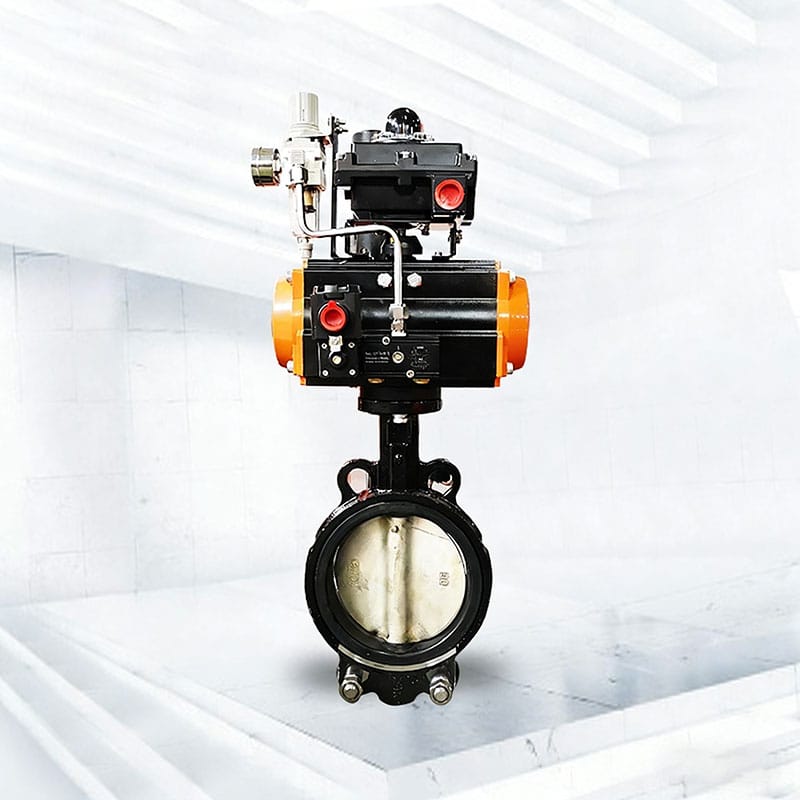
The choice between electric vs pneumatic actuation depends on specific application requirements and facility capabilities. Electric actuators offer precise positioning and low running costs but typically have higher initial costs and slower operation speeds. Pneumatic actuators provide fast operation, inherent explosion-proof characteristics, and fail-safe capabilities at lower initial costs, though they require a compressed air supply system. In water treatment applications, pneumatic actuators are often preferred for their reliability, fast response times, and ability to operate in hazardous environments without special explosion-proofing.
Manual butterfly valves vs air actuated systems present a clear trade-off between automation and cost. Manual valves have the lowest initial cost but require human intervention for every operation, making them unsuitable for automated processes or remote locations. Air actuated butterfly valves enable full automation, reduce labor requirements, and improve response times. The higher initial investment in pneumatic systems is typically offset by reduced operating costs, improved safety, and enhanced process control—particularly in water treatment facilities where multiple valves must be coordinated for optimal treatment efficiency.
Gate valve and globe valve alternatives offer different performance characteristics compared to butterfly valves. Gate valves provide full-bore opening with minimal pressure drop but are bulkier, more expensive, and slower operating than butterfly valves. Globe valves offer excellent throttling characteristics but create higher pressure drops and require more frequent maintenance. Butterfly valves combine compact design, fast operation, and cost-effectiveness, making them ideal for large-diameter water treatment applications where space and cost are significant considerations.
Cost, performance, and efficiency comparison reveals air actuated butterfly valves as a balanced solution for most water treatment applications. While gate valves may offer slightly better flow characteristics and globe valves provide superior throttling control, butterfly valves offer the best overall combination of performance, cost, and ease of maintenance. The table below summarizes key comparisons:
| Valve Type | Initial Cost | Operating Cost | Speed | Maintenance | Best For |
|---|---|---|---|---|---|
| Air Actuated Butterfly | Medium | Low | Very Fast | Low | Large-diameter water treatment lines |
| Electric Butterfly | High | Low | Medium | Medium | Precise modulating control |
| Manual Butterfly | Low | High | Slow | Low | Simple infrequent operations |
| Gate Valve | High | Low | Slow | Medium | Full port isolation |
| Globe Valve | High | Medium | Medium | High | Precise flow regulation |
Conclusion
Air actuated butterfly valves have proven themselves as indispensable components in modern water treatment facilities, offering a unique combination of fast operation, reliability, and cost-effectiveness. Their applications span the entire treatment process—from influent flow control and chemical dosing to sludge handling and effluent discharge. The automation capabilities provided by pneumatic actuators enable improved process control, reduced labor requirements, and enhanced safety—factors that contribute significantly to efficient plant operation.
The benefits of incorporating air actuated butterfly valves into water treatment systems extend beyond operational advantages to include economic considerations. The total cost of ownership, factoring in initial investment, operating costs, and maintenance requirements, makes these valves an economically sound choice for facility managers. Their durability and reliability ensure consistent performance over extended service periods, minimizing downtime and repair expenses.
Manufacturing expertise and product reliability play crucial roles in valve performance. As a specialized manufacturer, we understand the unique challenges of water treatment applications and design our valves to meet these demanding requirements. Our commitment to quality control ensures that each air actuated butterfly valve delivers reliable performance throughout its service life, providing our customers with confidence in their fluid control systems.
Contact us to find the perfect air actuated butterfly valve for your water treatment system. Our engineering team can provide expert guidance on valve selection, sizing, and application support, ensuring you receive the optimal solution for your specific requirements. Let us help you improve your water treatment facility’s efficiency, reliability, and operational safety with our proven pneumatic butterfly valve solutions.
FAQ
Q: What is the main advantage of using an air actuated butterfly valve in water treatment?
A: The primary advantage is fast operation combined with remote control capabilities. Pneumatic actuators can complete opening or closing cycles in as little as 0.05 seconds, enabling rapid response to process changes while allowing centralized control from your facility’s control room. This automation reduces labor requirements and improves overall system efficiency.
Q: How do I choose between a single acting and double acting air actuated butterfly valve?
A: Select a single acting actuator if you need fail-safe operation—the valve automatically returns to a safe position (open or closed) upon air or power loss. Choose a double acting actuator for modulating control applications where you require air pressure to control both opening and closing for precise positioning, but don’t need automatic fail-safe functionality.
Q: What maintenance does an air actuated butterfly valve typically require?
A: Regular maintenance is straightforward: daily visual inspections for air leaks, monthly filter cleaning or replacement, quarterly lubrication of moving parts, and annual seal inspection and replacement. Keep compressed air clean and dry (0.4–0.8 MPa pressure) and follow the manufacturer’s recommended maintenance schedule for optimal valve performance.
Q: What’s the difference between wafer type and flanged air actuated butterfly valves?
A: Wafer type valves fit between two pipe flanges, are lightweight, and cost 30–40% less—ideal for space-constrained installations. Flanged type valves have integral flanges, provide stronger connections, easier maintenance access, and better vibration resistance. Choose wafer for low-pressure, space-limited applications; select flanged for high-pressure systems or frequent maintenance needs.
Q: Can air actuated butterfly valves handle corrosive or high-solid content fluids in water treatment?
A: Yes, when properly specified with appropriate materials. Stainless steel or nickel-aluminum bronze construction provides corrosion resistance for aggressive chemicals. For high-solid content applications like sludge or backwash water, the streamlined disc design minimizes solid accumulation, and resilient seating materials ensure effective sealing even with particulate-laden fluids.