A valve that wears out every few months costs more than its replacement price. There is the shutdown, the labor and the risk of finding damaged seats just when the line needs to run. A ceramic ball valve may deserve a closer look—but first, establish why the current valve is failing.
Consider a ceramic ball valve when abrasion or chemical attack is damaging conventional wetted parts. Select it against the actual fluid, solids, pressure, temperature and operating duty, then confirm the ceramic grade, seat arrangement and actuator sizing. Hardness alone is not a selection method.
Where Phileda’s ceramic ball valve fits
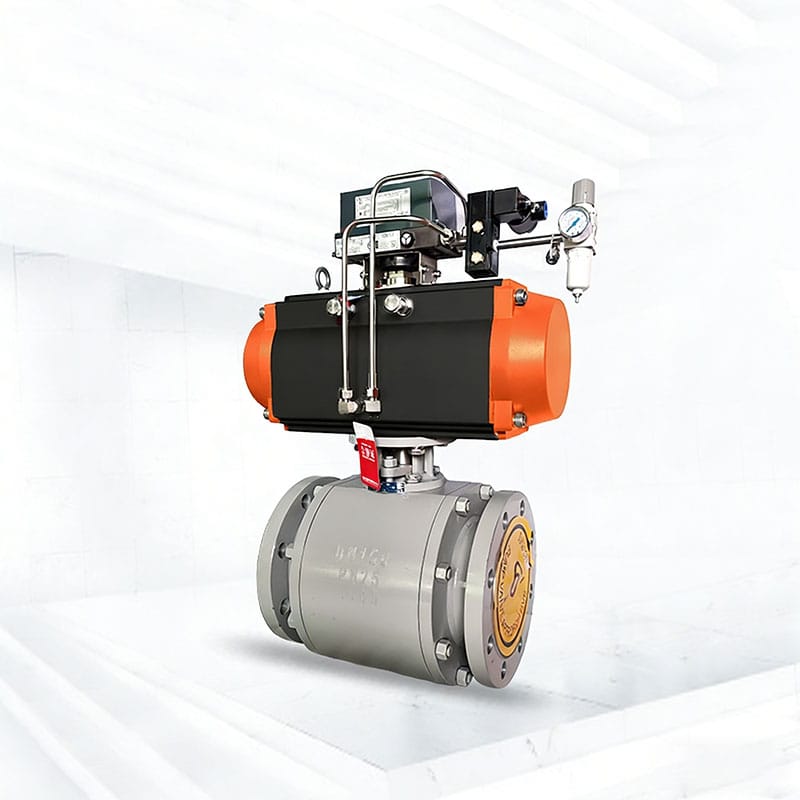
The Phileda pneumatic ceramic ball valve uses a ceramic ball and seat with pneumatic actuation. Its product page identifies abrasive and particle-containing media among the applications to evaluate. The exact operating limits and materials must be confirmed for the assembly offered.
Start with the damage, not the replacement material
Ask maintenance to describe where the old valve failed. Was the ball surface scored? Was material lost around the throttling area? Did the seat leak after solids settled during a shutdown? Photographs of cleaned components are useful evidence.
Wear, corrosion, trapped particles and unsuitable operating conditions can produce different problems. A ceramic upgrade should address the identified mechanism. If a valve is badly oversized or the process forces it to operate through a narrow opening, changing material alone may leave the underlying problem in place.
Five checks before you specify a ceramic ball valve
| Check | Information to provide | What to ask the supplier |
|---|---|---|
| Fluid chemistry | Composition, concentration, temperature and cleaning fluids | Which ceramic and seal materials suit every exposure? |
| Solids | Particle distribution, concentration, hardness and settling behavior | Can the proposed geometry handle the particles and shutdown conditions? |
| Pressure and flow | Operating cases and maximum shutoff differential pressure | What governs the valve and actuator selection? |
| Temperature changes | Normal duty, startup, flushing and cleaning cycles | What temperature-change limits apply? |
| Operating duty | On/off or regulating duty, frequency and required stroke time | Is this configuration suitable for that duty? |
Specify the ceramic and the rest of the wetted parts
“Ceramic trim” is not a complete material specification. Ask which components are ceramic, their grades and how they are supported. Check the stem, seals, packing and other exposed components as well. A compatible ball does not establish compatibility for the entire valve.
Include cleaning chemicals and occasional batches in the review. The quotation should identify the offered materials clearly enough to compare alternatives.
Describe the particles the valve will actually see
Give more than the word “slurry.” Include the concentration, particle-size distribution, largest credible particles and whether the solids are hard, sharp, sticky or prone to settling. Explain what happens when the line stops.
Ask how the proposed valve deals with deposits and whether flushing is required. For a wider review of piping and process conditions, see our slurry-service valve guide.
Separate isolation from flow regulation
An on/off valve and a valve that throttles all day face different demands. For isolation, specify the shutoff differential pressure and agreed leakage test. For regulation, submit minimum, normal and maximum flow together with the corresponding upstream and downstream pressures.
Have Phileda confirm whether the ceramic configuration offered suits the required regulating duty. If flow control is the primary requirement, also discuss the pneumatic V-port ball valve. The choice should follow the sizing and material review.
Include startup and cleaning temperatures
A steady operating temperature does not describe the full duty. A hot line followed by a cold flush can create a different material challenge. Provide the temperature range and expected rate of change, and request the permissible limits for the supplied ceramic assembly.
Avoid taking a general “high-temperature” description as a numerical rating. The pressure boundary, seals, ceramic components and mounting arrangement all need to suit the conditions.
Review the complete pneumatic package
Provide the minimum air pressure available at the actuator, required opening and closing times, operating frequency and failure position. Confirm the solenoid, position indication and positioner requirements.
The actuator must be selected for the valve torque under the stated conditions. Do not assume a pneumatic assembly closes automatically when air is lost; have the failure response documented for the offered package.
Compare the cost per operating period
Ask for comparable quotations covering the same materials, controls, tests and spare parts. Then assess purchase cost alongside maintenance effort, replacement frequency and downtime. Use your own service history; a generic lifespan claim is not a dependable savings calculation.
For a new application, agree the acceptance criteria and inspection plan before ordering. Where operating history is limited, discuss a trial and what evidence would justify wider use.
Request a service-specific quotation
Send Phileda your ceramic ball valve inquiry with quantity, connection details, fluid chemistry, solids data, pressure-temperature cases, operating duty and air supply. Add photographs of failed components and the existing valve drawing if available.
Request the proposed ceramic grade, wetted-parts list, dimensional drawing, actuator selection basis and leakage-test criteria. These details make the offer useful for an engineering review as well as a purchasing comparison.
FAQ
Is a ceramic ball valve always better than a metal ball valve?
No. It is a candidate where its material properties address the service’s wear or chemical exposure. Temperature changes, mechanical loads, geometry and the complete materials list still need review.
Can a ceramic ball valve handle slurry?
Some configurations are intended for particle-containing media. Suitability depends on the actual particles, concentration, fluid, pressure and operating duty. Submit those details for a service-specific recommendation.
Can I use it for continuous throttling?
Confirm this for the exact valve configuration. Continuous regulation requires a flow-sizing review and suitable actuator controls, in addition to material compatibility.
What should a ceramic ball valve quotation include?
Ask for the materials, operating limits, connection dimensions, actuator and accessories, test criteria, documentation, spare parts and delivery scope.