A butterfly valve needs to open, close and sometimes hold a position between the two. Both pneumatic and electric actuators can do that. The better choice usually comes down to what is available on site and how the valve will be used.
If the plant already has a dependable instrument-air supply, pneumatic actuation is worth considering. If there is no air line nearby, an electric actuator may be easier to install.
Choose between pneumatic and electric butterfly valves by comparing the available utilities, operating frequency, required stroke time and failure response. Neither drive type determines the complete valve specification.
Phileda offers both options. This guide uses the D671 Pneumatic Wafer Type Butterfly Valve and D941X Electric Butterfly Valve as starting points for a project-specific selection.
The main differences
A pneumatic actuator uses compressed air to turn the valve shaft. An electric actuator uses a motor. That affects the installation, controls and maintenance requirements.
| Selection point | Pneumatic butterfly valve | Electric butterfly valve |
|---|---|---|
| Driving energy | Compressed air | Electrical power |
| Site infrastructure | Air supply and tubing; controls may also need electricity | Power and control wiring |
| Operating duty | Check air consumption, cycling and actuator sizing | Check duty rating, starts per hour and modulating capability |
| Operating speed | Depends on actuator, air delivery and accessories | Depends on gearing and control arrangement |
| Failure response | Depends on actuator type and accessory circuit | Depends on actuator design and stored-energy provision |
| Flow regulation | Requires a suitable positioning arrangement | Requires an actuator configured for modulation |
| Maintenance focus | Air leaks, air quality, seals and accessories | Connections, enclosure condition and drive components |
When the D671 pneumatic butterfly valve makes sense
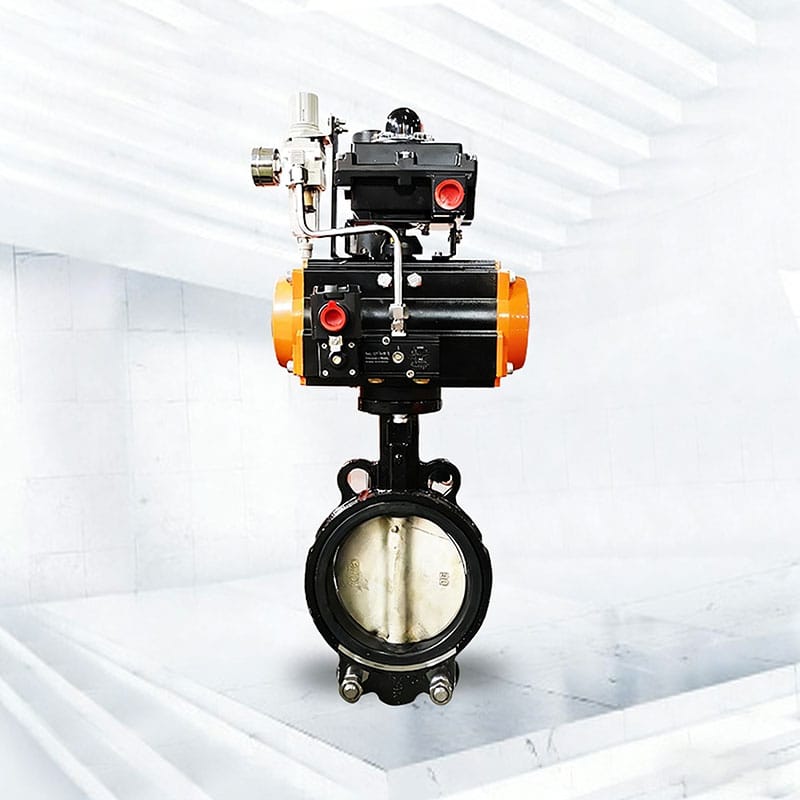
Phileda’s D671 Pneumatic Wafer Type Butterfly Valve combines pneumatic actuation with a compact body installed between pipe flanges. The product is described for automated operation in medium- and low-pressure piping systems.
It is a relevant starting point for a plant that already uses compressed air to operate valves. Consider a water-treatment installation with several valves switching throughout the day. If a suitable air supply is available near the pipework, a pneumatic assembly may fit the existing maintenance and control arrangements.
Confirm the minimum air pressure available at the actuator, particularly when other equipment is operating. Compressor discharge pressure does not necessarily describe the supply available at a distant valve.
Specify the operating duty as well. A valve that moves twice a day has a different duty from one continually adjusting flow. The D671 page lists water supply, wastewater treatment and HVAC among its applications. Check media compatibility, seat material and operating limits for the selected configuration.
When to consider the D941X electric butterfly valve
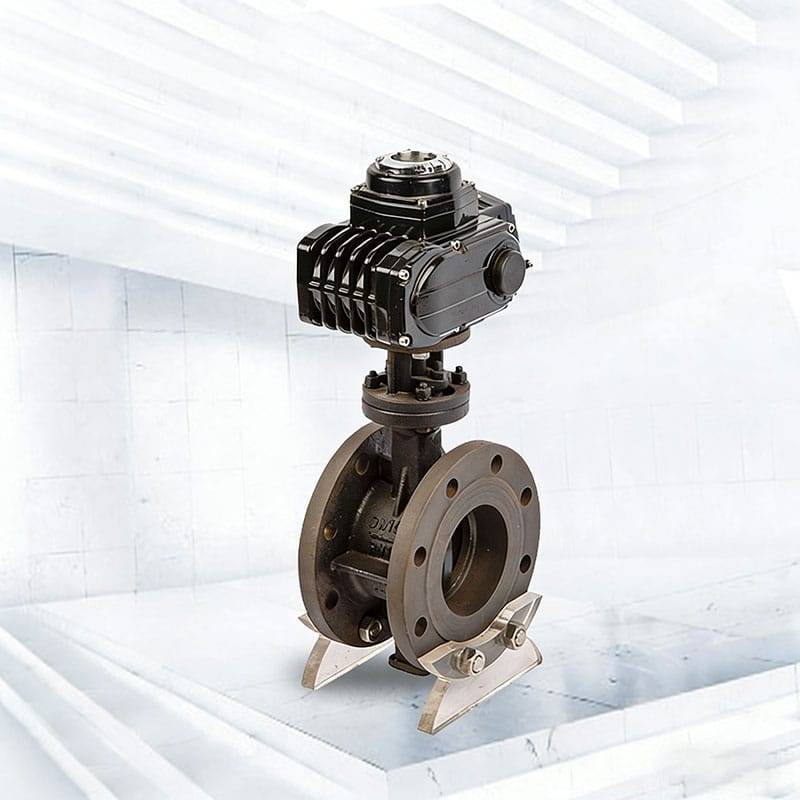
The Phileda D941X Electric Butterfly Valve is a soft-seated design offered with electric actuation for remote opening, closing or proportional control, depending on configuration.
It is worth reviewing where electrical power is available but installing an air line would add unnecessary work. A valve in a separate utility building, for example, may be easier to connect electrically than pneumatically.
Make clear whether the valve will provide open/close operation, intermediate positioning or continuous modulation. These duties should not be treated as interchangeable when specifying the actuator.
Confirm the voltage, control interface, duty rating and permissible operating frequency. Bray’s electric actuator specification sheet provides an example of how manufacturers document duty and power-loss options. Its ratings apply to Bray equipment, not to the Phileda D941X.
Decide what must happen when a utility fails
Failure response deserves its own line on the datasheet. A pneumatic valve does not automatically close when the air supply fails. Double-acting and spring-return actuators behave differently, and the accessories can affect the result.
An electric valve should not be assumed to move to a safe position after a power failure either. That requires a suitable actuator arrangement.
Describe the required result plainly: “On loss of instrument air, the valve must close.” Review loss of the control signal separately from loss of driving energy.
Ask the supplier how the complete assembly achieves the required action. For spring-return operation, sizing needs to account for the available output through both powered and spring strokes.
Don’t choose on speed alone
Specify the opening and closing times the process needs, then ask for confirmation against the complete assembly. Actuator size, utilities and accessories all affect the result.
Faster closing is not always an advantage. The piping system may require a controlled closing time to limit pressure transients. A transfer line may need a predictable shut-off sequence, while a temperature-control loop may place more emphasis on positioning behavior.
For flow regulation, check more than the actuator
Both drive types can be configured for positioning. That does not make every butterfly valve suitable for every regulating duty.
Provide minimum, normal and maximum flow with corresponding inlet and outlet pressures. Ask for capacity data and expected operating positions. Selecting only for maximum capacity leaves part of the operating range unreviewed.
For a pneumatic assembly, confirm the positioner and feedback requirements. For an electric assembly, confirm the modulating actuator specification and control interface. Use a worked RFQ datasheet to organize the operating cases.
Compare installed cost, not just valve price
A lower purchase price can be offset by installation work. For pneumatic actuation, include tubing, air preparation, controls and ongoing air consumption. For electric actuation, include cabling, electrical installation and control equipment.
Check quotation scope carefully. A valve and actuator alone should not be compared directly with an assembly supplied with feedback and accessories.
| Cost item | What to check |
|---|---|
| Valve assembly | Body, seat, actuator and mounting |
| Utilities | Air connection or electrical supply |
| Controls | Positioner, switches, feedback and local controls |
| Installation | Tubing, wiring, supports and access |
| Maintenance | Available skills, spares and inspection needs |
What to send Phileda with your inquiry
- Medium and operating temperature.
- Flow range and inlet/outlet pressures.
- Connection size and flange requirements.
- On/off or modulating duty and operating frequency.
- Required opening and closing times.
- Available air pressure or electrical supply.
- Control signal and position-feedback requirements.
- Required action after loss of air, power or signal.
- Installation environment and access restrictions.
Review the D671 pneumatic butterfly valve where a suitable air supply is available, or the D941X electric butterfly valve where electric actuation fits the installation. Send your operating details through Phileda’s contact page and request confirmation of the selected valve, actuator and accessories.
FAQ
Which is better: a pneumatic or electric butterfly valve?
Neither is better for every installation. Compare utilities, operating duty, stroke time and required failure behavior.
Does the D941X support modulating control?
Phileda lists on/off and modulating configurations. Specify the control signal and operating duty when requesting a quotation.
Does the D671 close automatically when air is lost?
Confirm the actuator and accessory arrangement. The model name alone does not establish the failure action.
Can I replace a pneumatic actuator with an electric actuator?
Have the complete assembly reviewed first. Mounting, shaft connection, torque, travel stops, controls and failure behavior all need checking.