A control valve RFQ is the point where engineering requirements become a supplier offer and future purchase-order scope. If the request contains incomplete process cases, vague accessories, or undefined tests, suppliers will make different assumptions and prices will not be comparable.
An effective control valve RFQ gives every bidder the same technical basis, asks for the same returned data, and requires deviations to be visible. It does not need to dictate every design detail, but it must define performance, interfaces, verification, and deliverables.
This guide helps project engineers and procurement teams prepare a control valve RFQ that supports fair technical evaluation and reduces changes after award.
Table of Contents
Freeze the Bid Basis Before Requesting Prices

The control valve RFQ should issue a controlled package containing the requisition, tag index, datasheets, project specification, P&IDs, line information, instrumentation standards, coating rules, quality requirements, and document schedule. Identify the governing revision of each file.
The control valve RFQ should state the bid due date, technical-question process, required response format, Incoterm or delivery boundary where relevant, and whether alternatives are permitted. Commercial conditions should not change the technical definition.
Resolve known document conflicts before issue. If data remains preliminary, label it and define how later change will be handled.
Package the Process Data by Operating Case
The control valve RFQ should provide minimum, normal, maximum, startup, shutdown, cleaning, and upset cases with upstream and downstream pressure, temperature, flow, fluid properties, composition, solids, and phase. Distinguish operating conditions from mechanical design conditions.
A control valve RFQ should give units and data sources and identify the controlling process objective. Ask bidders to list any assumed vapor pressure, density, compressibility, pipe roughness, or downstream pressure.
Use the control valve sizing guide to find missing inputs before the package is released.
Define the Supply Boundary Line by Line
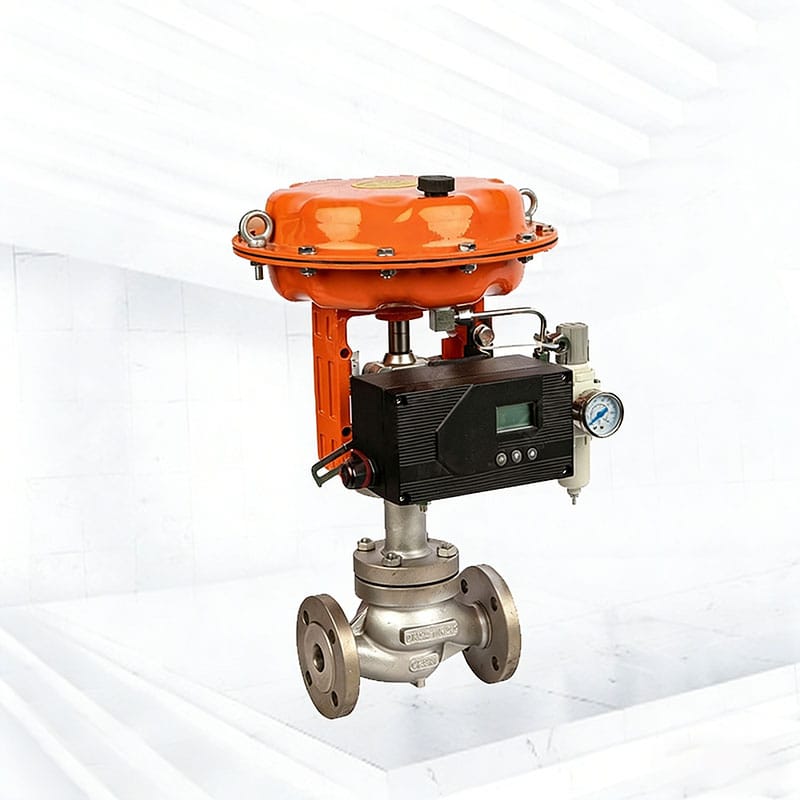
The control valve RFQ should create a scope table for valve, actuator, brackets, coupling, positioner, regulator, gauges, solenoid, switches, booster, volume tank, tubing, fittings, cables, connectors, mounting hardware, and special tools. Assign supply and installation responsibility.
The control valve RFQ must also define mating flanges or counterflanges, gaskets, bolting, air sets, junction boxes, sunshades, insulation covers, lifting devices, and loose-shipped items where applicable.
A low offer may simply omit scope included by another bidder. Normalize the boundary before comparing price or delivery.
Require Calculations That Make Offers Comparable
The control valve RFQ should require suppliers to return required Cv, selected Cv, predicted travel, noise, cavitation, flashing, choked flow, velocity, and the controlling case. Ask for actuator force or torque calculations and accessory-flow assumptions.
For a control valve RFQ, specify the calculation method and expected output. Recognized sources include ISA-75 standards resources.
The returned calculation should identify valve size, trim, characteristic, flow direction, recovery factors, process assumptions, actuator model, minimum utility pressure, and design margin.
Use a Structured Deviation Schedule
Require a clause-by-clause response with one status per requirement: comply, deviate, clarify, or not applicable. Every deviation should identify the document clause, offered condition, technical effect, commercial effect, and proposed resolution.
A control valve RFQ should state that information hidden in a catalog or general note does not replace the deviation schedule. Review alternatives on engineering merit without allowing them to obscure exceptions.
Keep clarifications and agreed resolutions in the bid record so they can be incorporated into the purchase order.
Separate Technical Evaluation from Commercial Normalization
A control valve RFQ technical evaluation should confirm process suitability, materials, construction, performance, actuator, accessories, tests, documents, deviations, and maintainability. Commercial normalization should then align quantities, included scope, spares, services, freight, and schedule.
The control valve RFQ evaluation team should avoid scoring price before material technical gaps are understood. An incomplete package can appear less expensive while creating site work or performance risk.
Use the control valve specification guide to connect each evaluation item to a requirement.
Make Testing and Witnessing Visible in the Offer
List required pressure, seat leakage, external leakage, material, calibration, travel, fail-action, stroke-time, and dynamic tests. Define procedures, acceptance limits, review points, witness points, and notification periods.
A control valve RFQ should ask suppliers to price optional tests separately only when the buyer truly considers them optional. Mandatory quality evidence should remain in the base scope.
Quality-system context may include ISO 9001 information. Testing may reference ISO 5208, ASME B16.34, or the project’s applicable standards.
Request Documents at Bid and After Award
At bid stage, request enough data to evaluate the offer: completed datasheet, calculations, general arrangement, materials schedule, accessory list, deviation schedule, test proposal, delivery schedule, and document index.
The control valve RFQ should separately define after-award submissions, approval cycles, final as-built files, native configuration files, certificates, inspection records, manuals, and spare-parts lists.
Use the control valve documentation guide. Include language, file format, naming, metadata, and revision requirements.
Compare Offers with a Normalized Matrix
| Evaluation line | Supplier A | Supplier B | Normalized question |
|---|---|---|---|
| Valve and trim | Returned design | Returned design | Do both cover every operating case? |
| Actuator and accessories | Included list | Included list | Are scope and minimum utility assumptions equal? |
| Testing | Base and options | Base and options | Are procedures and acceptance limits equivalent? |
| Documents | Index and schedule | Index and schedule | Are final deliverables and native files included? |
| Deviations | Clause schedule | Clause schedule | What technical or commercial impact remains? |
Build the matrix from the control valve RFQ before bids arrive. This keeps evaluation focused on requirements instead of supplier document style.
Clarify Spares, Tools, and Site Services
The control valve RFQ should request commissioning spares, recommended operating spares, long-lead components, wear parts, special tools, preservation, storage, and shelf-life information. Tie every spare to the final bill of materials and manufacturer part number.
A control valve RFQ should clarify whether site supervision, commissioning, training, diagnostic support, or performance testing is included. Define travel, hours, language, prerequisites, and reports for any service scope.
The control valve spare-parts guide supports the review.
RFQ Release Checklist
- Approved tag list, quantities, revisions, P&IDs, datasheets, and project specifications.
- Complete process cases, properties, design conditions, line data, control function, and fail consequence.
- Explicit valve, actuator, accessory, tubing, wiring, mounting, test, document, and service boundaries.
- Required returned calculations, drawings, materials, certificates, schedules, and clause-by-clause response.
- Inspection and test plan, acceptance criteria, witness points, documentation milestones, and deviation process.
- Commercial normalization fields for scope, spares, options, schedule, warranty boundary, and exclusions.
Use a release review involving process, piping, mechanical, instrumentation, materials, quality, maintenance, and procurement. A control valve RFQ is ready when another engineer can understand the required function without relying on unwritten assumptions.
Frequently Asked Questions
How many suppliers should receive the RFQ?
Follow the project procurement strategy and approved-vendor rules. The key is that every invited supplier receives the same controlled package and clarification record.
Should suppliers be allowed to offer alternatives?
Yes when the project permits them, but require a compliant base offer or a clear deviation and explain performance, interface, schedule, and maintenance effects.
What makes quotations difficult to compare?
Different process assumptions, omitted accessories, unpriced tests, vague documents, inconsistent materials, and hidden deviations create the largest gaps.
When should technical clarifications be closed?
Close material technical issues before award and incorporate agreed answers into the purchase order and final datasheet.
Should spare parts be included in the base quote?
Define the procurement strategy. At minimum, ask for itemized commissioning and recommended operating spares so scope and lead time can be evaluated.
A Good RFQ Prevents Hidden Scope

A strong control valve RFQ produces comparable technical and commercial offers because it controls the bid basis, exposes deviations, and defines the complete supply, test, and document boundary.
Send Phileda the controlled datasheets, process cases, specification, scope table, and test requirements through the contact page to request a traceable quotation.