An electric butterfly valve can receive a command from the control room without being able to regulate flow continuously. That distinction is easy to miss when a purchase specification says only “electric actuator.” It is also a common reason two apparently similar quotations cover different equipment.
Select an on/off electric butterfly valve when the process needs defined open and closed positions. Specify a modulating configuration when the valve must follow a changing position demand. For either duty, confirm the process conditions, actuator duty rating, electrical supply, control interface and required response to power loss.
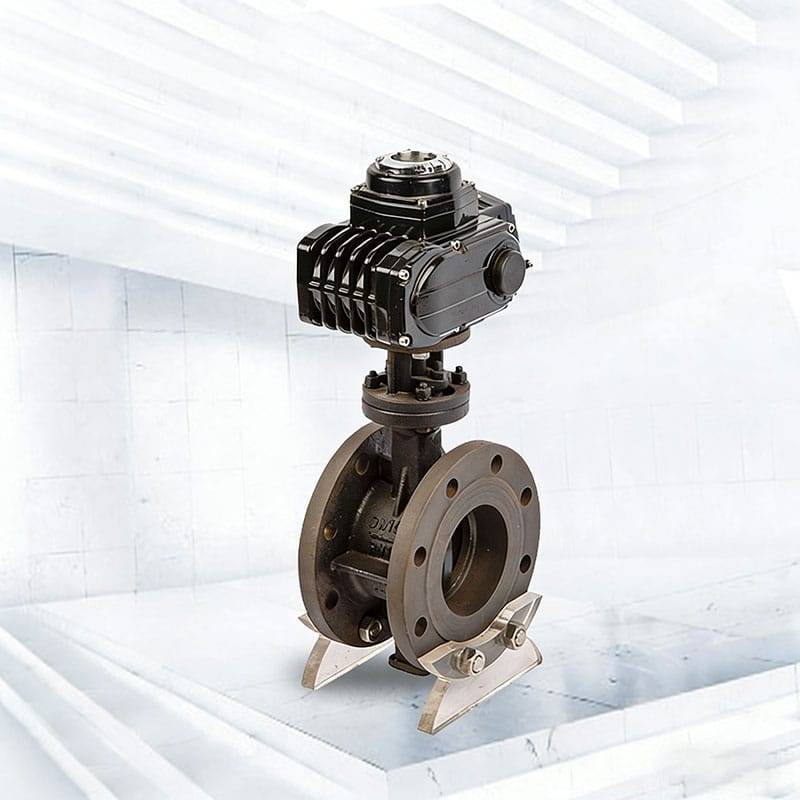
This electric butterfly valve selection guide uses the Vanne papillon électrique Phileda D941X as the product example. Its soft-seated design is offered with on/off or modulating configurations. The actuator and signal details need to be confirmed for the assembly quoted.
Match the control mode to the actual application
| Example application | Required behavior | Configuration to discuss |
|---|---|---|
| Cooling-water branch serving a production machine | Open when the machine runs; close when the branch is taken out of service. | On/off operation, with open/closed feedback and an agreed stroke time. |
| Water-treatment filter inlet | Admit or stop incoming water as part of the filter operating sequence. | On/off operation, with sequence interlocks and confirmed position feedback. |
| Cooling-water feed to a heat exchanger | Adjust water flow as the temperature controller changes its demand. | Modulating operation, subject to flow sizing and actuator duty review. |
These examples describe control tasks, not pre-approved D941X applications. Suitability depends on the water chemistry, temperature, pressure, differential pressure and required performance.
What an on/off configuration needs
For a branch isolation valve, establish how the control system commands movement and how it confirms completion. Specify the electrical supply, command arrangement, end-position feedback and any local controls required.
Ask for the actuator travel time. In a liquid system, the acceptable closing time should reflect the piping system’s surge assessment. Selecting the fastest actuator is not a substitute for that check.
Also distinguish operating isolation from maintenance isolation. A normal closed indication does not establish a safe maintenance boundary. The site’s isolation procedure and the agreed valve leakage criteria still apply.
What changes for modulating service
A modulating assembly must position the disc in response to the controller’s demand. Specify the command signal, feedback signal and behavior if that signal is lost. Do not assume a particular analog signal or communication protocol is included.
Provide the minimum, normal and maximum flow rates with their corresponding upstream and downstream pressures. Include fluid properties and temperatures so the supplier can review capacity and the intended operating range. Pipe diameter alone is insufficient.
The actuator must also suit the expected number and frequency of corrections. Ask for its modulating duty rating and operating limits. An actuator suitable for occasional isolation may not suit a temperature loop that makes frequent adjustments.
Check the seat against the fluid and temperature
The D941X product page identifies a soft-seal construction. Ask which seat compound is offered and confirm compatibility with the process fluid, treatment chemicals and cleaning conditions. “Water service” can include very different chemical exposures.
Request the pressure-temperature limits for the complete valve and the allowable shutoff differential pressure. Keep body rating, seat limits and actuator torque requirements separate in the review. One satisfactory value does not establish all three.
Decide what should happen when power disappears
Loss of electrical power and loss of the control signal are different events. State the required response to each. If the process needs movement to a defined position after power failure, ask how the offered assembly supplies the energy to make that movement.
Do not infer fail-close capability from an electric actuator photograph or model-family name. Have the complete failure response confirmed in writing, including any stored-energy equipment and its maintenance requirements.
If instrument air is available and failure response is a deciding factor, compare alternatives using our pneumatic vs electric butterfly valve guide.
Verify the assembly fits the pipework
For a replacement, provide the existing valve’s connection standard, face-to-face length, pipe bore and a drawing of nearby fittings. Check disc clearance and maintenance access as well as the space occupied by the actuator.
Leave access to electrical entries, local indication and any manual override. Confirm the enclosure and installation requirements for the actual location, especially outdoors or in washdown areas. Ask for the assembly drawing and wiring diagram before approving the order.
Compare quotations on the same scope
A useful comparison lists the valve materials, seat compound, actuator model, supply voltage, control mode, feedback and failure response. Add testing, documentation, commissioning support and spares to that list.
For the heat-exchanger cooling-water example, request the sizing review and actuator duty confirmation. For a filter inlet valve, concentrate on the sequence interface, position confirmation and acceptable closing time. The purchasing checklist should reflect the task.
Request a D941X quotation with the right information
Send Phileda your electric butterfly valve inquiry with the quantity, size, connection details, fluid, operating pressure and temperature, maximum differential pressure and required control mode. Include flow cases for regulation and the available electrical supply.
State the command and feedback requirements, operating frequency, target stroke time and required response to power or signal loss. Attach the existing drawing for a replacement. Ask the proposal to identify any assumptions or missing information before purchase approval.
FAQ
Can an on/off electric butterfly valve regulate flow?
Do not assume it can provide continuous regulation. Specify a suitable modulating actuator and control interface, then have the valve sized for the operating flow cases.
Does the D941X come with a modulating actuator?
Phileda lists on/off and modulating configurations. Confirm which is included in the offer, together with the signal, feedback and duty rating.
Will an electric butterfly valve close on power failure?
That depends on the assembly. A required fail-close action needs a confirmed means of moving the valve after normal power is lost. Request the failure-response details with the quotation.
What information is needed to size a modulating valve?
Provide minimum, normal and maximum flow, the matching inlet and outlet pressures, fluid properties and temperature. Include the control task and any limits on noise or pressure loss.