When one process line needs to serve two destinations, a three-way ball valve can make the piping arrangement simpler. The selection gets less straightforward when you need both branches open, a defined shut-off position or a particular flow path after an air failure.
That’s where the port arrangement matters.
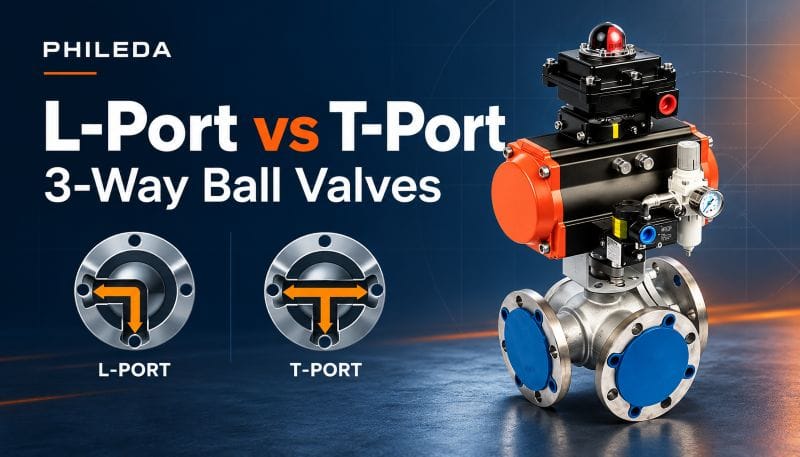
An L-port typically switches a common connection between two branches. A T-port allows additional connections, including an all-three-connected position where the valve design permits it. The right choice depends on how your system needs to operate—not just how many connections the valve has.
For projects using Phileda’s Vanne à bille pneumatique à trois voies, start with a sketch of the required flow paths. That gives the selection team a clear basis for confirming the valve configuration and pneumatic operation.
Table des matières
Where Phileda’s pneumatic three-way ball valve fits
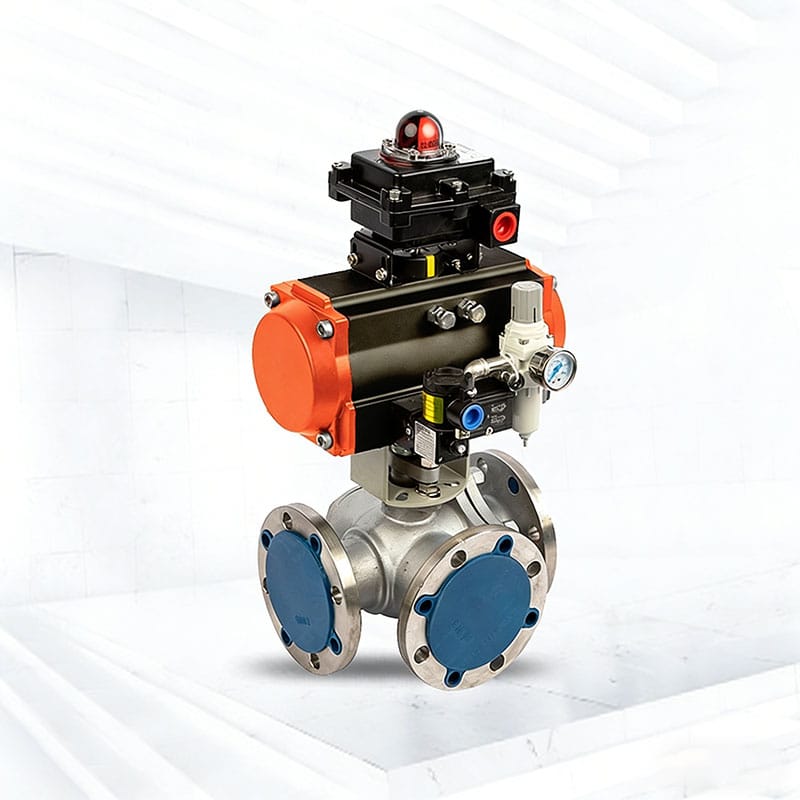
Phileda’s pneumatic three-way ball valve is intended for diverting, combining and switching media between pipeline connections. Its pneumatic drive makes it a product to consider for automated routing duties, including process-line switching, media distribution and water-treatment circuits. View the product details.
A typical inquiry might involve one supply feeding either of two tanks. Another might involve switching a line between production and return service.
In both cases, the first question is the same: which connections must be open at each operating position?
Write that sequence down before choosing the port arrangement.
L-port or T-port? Start with the piping
The letters describe the passages through the ball. An L-shaped passage connects two ports at a time. A T-shaped passage provides more possible connections, although the positions available in the finished assembly depend on its construction and travel limits.
| Your process requirement | Arrangement to discuss with the supplier |
|---|---|
| Send one supply to either of two destinations | L-port switching arrangement |
| Select between two sources feeding one line | L-port, subject to permitted flow direction and sealing requirements |
| Connect a common line to both branches | T-port arrangement with an appropriate all-three-connected position |
| Combine two streams | Suitable T-port or other mixing arrangement, with hydraulic conditions reviewed |
| Isolate all connections | A design with a confirmed off position and specified leakage performance |
These are starting points for selection. Approval should be based on the flow diagram for the actual valve being supplied.
For an example of manufacturer-specific switching arrangements, see Swagelok’s ball valve technical catalog. Always confirm the flow diagram for the valve you intend to purchase.
The pneumatic actuator needs to match the routing sequence
Choosing the ball passage is only half the job. The actuator must move it to the required positions and stop it in the right places.
For an automated assembly, confirm:
- The number of operating positions.
- The permitted rotation and travel stops.
- Minimum available instrument-air pressure.
- Pressure conditions used for actuator sizing.
- Required position indication.
- The flow path after loss of air, power or signal.
Be especially careful with the terms “fail open” and “fail closed.” On a three-way valve, they can mean different things to different people.
A better specification is:
On loss of instrument air, connect the common line to the return branch and isolate the production branch.
That describes the process result. The proposed actuator and accessory arrangement can then be checked against it.
Check what happens between positions
A valve may provide the correct routing at both ends of its travel but briefly connect other paths while turning.
That can matter when switching between different fluids, lines at different pressures, or production and cleaning circuits.
If the two branches must remain separate, state that requirement explicitly. Ask whether cross-connection occurs during travel and whether the proposed assembly is suitable for the duty.
Also distinguish a closed flow path from an acceptable isolation boundary. If a branch must be isolated for maintenance, its leakage requirements and the plant’s isolation procedure need a separate review.
Make sure a three-way valve is the product you need
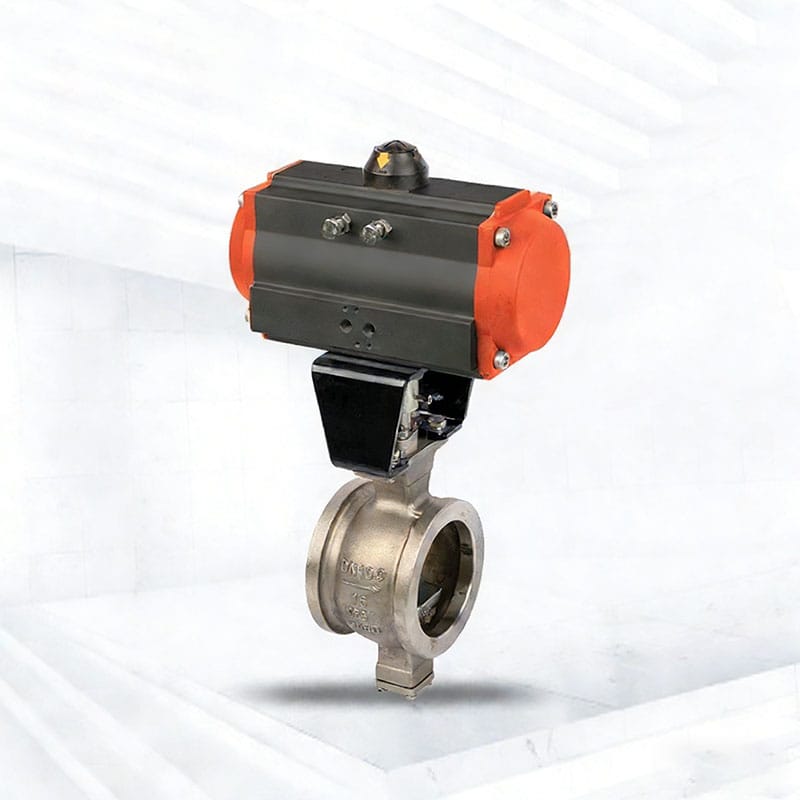
Some inquiries begin with a request for a three-way valve when the real requirement is continuous flow regulation or simple on/off control.
celle de Phileda ball valve range lists several distinct product types:
| Product | Requirement to discuss during selection |
|---|---|
| Vanne à bille pneumatique à trois voies | Routing flow between three pipeline connections |
| Vanne à bille de régulation pneumatique à port en V | A duty requiring flow regulation rather than branch selection alone |
| Robinet à tournant sphérique actionné par interrupteur pneumatique | A line that primarily needs automated opening and closing |
| Vanne à bille en céramique pneumatique | A material-selection inquiry where the medium and wear conditions need review |
These products should not be treated as interchangeable. Explain what the process must do, then have the proposed structure checked against the operating conditions.
For example, combining two streams through a three-way valve does not automatically maintain a mixing ratio or outlet temperature. If accurate regulation is required, include the control objective in the inquiry.
What to send Phileda for a three-way valve quotation
A marked-up piping sketch is the most useful place to start. Label each connection and show the required flow path at every operating position.
Include:
- Medium and operating temperature.
- Pressure at each connection.
- Required flow and allowable pressure drop.
- Connection size and standard.
- Material and leakage requirements.
- Switching frequency.
- Available air supply.
- Required failure routing.
- Any restrictions on cross-connection during travel.
Ask for the proposed flow diagram with the quotation. Review it against your piping sketch before approving the valve assembly.
To discuss a routing application, send these details with your inquiry for the Phileda Pneumatic Three Way Ball Valve. Confirming the port sequence early helps avoid ordering a valve that fits the pipework but connects the wrong lines.
FAQ
Does Phileda’s three-way ball valve come with an L-port or T-port?
Confirm the available arrangement with Phileda for your application. Include a flow-path sketch so the proposed configuration can be checked against the required sequence.
Can a T-port valve split flow equally between two branches?
Connecting both branches does not guarantee an equal split. Branch pressure and resistance affect how much flow goes each way.
Can a pneumatic three-way ball valve shut off all flow?
That depends on the valve design and permitted positions. Request confirmation of the off position, if required, and the applicable leakage specification.
Should I choose a three-way valve or a V-port regulating ball valve?
Start with the duty. A three-way valve routes flow between connections. If the main requirement is continuous regulation, discuss the control range and operating conditions when reviewing a V-port regulating design.