Control valve material selection determines more than corrosion resistance. The body contains pressure, the trim throttles high-velocity fluid, guides carry sliding contact, packing seals a moving stem, and gaskets protect static joints. These parts experience different chemistry, temperature, velocity, stress, and wear even though they belong to one valve.
A reliable control valve material selection process maps each component to its actual exposure. It then checks process composition, concentration, temperature, pressure, phase, solids, cleaning chemicals, and credible upset conditions. Starting with a familiar alloy name and trying to justify it afterward can leave small but critical parts unreviewed.
This engineering guide shows how to turn process data into a traceable material specification for industrial control valves. It is intended for process engineers, materials specialists, maintenance teams, and buyers who need comparable offers and documentation that remains useful after the valve is installed.
Table of Contents
Map Every Part That Touches the Process
For control valve material selection, create a wetted-parts list before choosing alloys. Include body, bonnet, plug or ball, seat, cage, stem, shaft, guides, bushings, pins, fasteners exposed to the process, seals, packing, gaskets, and any liner or coating. For each item, identify continuous, intermittent, or accidental exposure.
Control valve material selection often fails at interfaces. A corrosion-resistant body may still contain a standard stem, spring, pin, or seat retainer that is unsuitable for the fluid. Drawings and bills of material should identify the exact material of every pressure-retaining and wetted component rather than using broad notes such as “trim: stainless steel.”
During control valve material selection, also define which surfaces are exposed during flushing, cleaning, sterilization, depressurization, and maintenance. Residual fluid can concentrate in cavities, while steam-out or chemical wash conditions may exceed normal temperature or create a different corrosion mechanism.
Chemistry Changes with Concentration and Temperature
For control valve material selection, material compatibility tables are useful screening tools, but they depend on concentration and temperature. A material that performs well in a dilute solution at ambient conditions may corrode rapidly at a higher concentration or temperature. Mixtures can behave differently from their individual components.
For control valve material selection, request composition ranges rather than a single nominal value. Identify water content, pH, dissolved oxygen, chlorides, sulfur species, solvents, inhibitors, and contaminants where relevant. Confirm whether phase changes, flashing, gas breakout, or evaporation can concentrate aggressive species inside the valve.
During control valve material selection, use recognized corrosion data, operating experience from the same service, and the project materials engineer. The AMPP corrosion basics resources and NIST materials data resources can support the review, but they do not replace service-specific evaluation.
Separate Corrosion from Erosion and Mechanical Wear
| Damage mechanism | Where it often appears | Selection response |
|---|---|---|
| General or localized corrosion | Body cavities, crevices, welds, stagnant zones | Select compatible base material and control chemistry or deposits |
| Erosion or particle impingement | Throttling edges, turns, reducers, downstream surfaces | Reduce local velocity, use resistant trim, and improve geometry |
| Cavitation or flashing damage | Trim outlet, body wall, downstream piping | Address pressure staging and material toughness together |
| Galling or adhesive wear | Stem guides, plug-cage contact, threaded interfaces | Review hardness difference, finish, pairing, and lubrication limits |
In control valve material selection, corrosion is chemical or electrochemical material loss; erosion is mechanical removal by moving fluid or particles. Many severe services combine them. A harder alloy may resist abrasion but still corrode, while a corrosion-resistant alloy may be damaged quickly by high-velocity solids.
Control valve material selection must therefore follow the identified damage mechanism. Examine failed parts, deposit composition, wall-loss pattern, operating position, velocity, pressure recovery, and fluid phase. The cavitation versus flashing guide explains why material upgrades alone cannot correct an unsuitable pressure-drop design.
Body and Bonnet Materials Set the Pressure Boundary
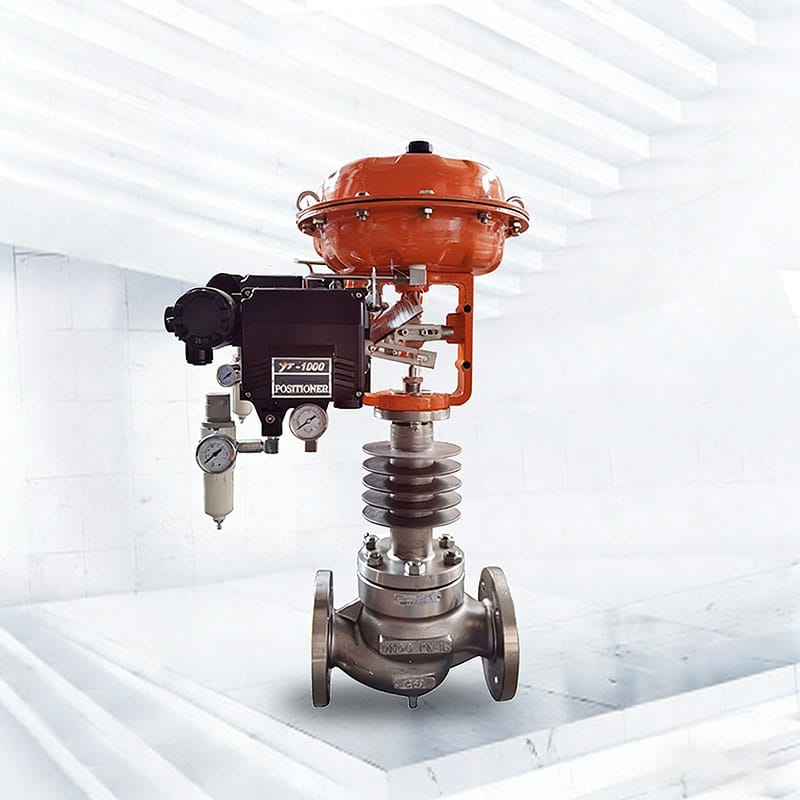
Control valve material selection for the body and bonnet must satisfy the design pressure and temperature as well as corrosion requirements. Check the applicable valve design standard, pressure class, end connection, casting or forging specification, heat treatment, weldability, impact properties, and any low-temperature restrictions.
For control valve material selection, avoid mixing nominal alloy families with exact specifications. “Stainless steel” or “chrome-moly” is not enough for control valve material selection because grades, product forms, heat treatments, and allowable stresses differ. The purchase specification should identify recognized material designations and required supplementary tests.
Applicable design references may include ASME B16.34 and project piping codes. Confirm the jurisdiction, code edition, material group, pressure-temperature rating, and any requirements for impact testing or post-weld heat treatment.
Trim Materials Face the Highest Local Stress
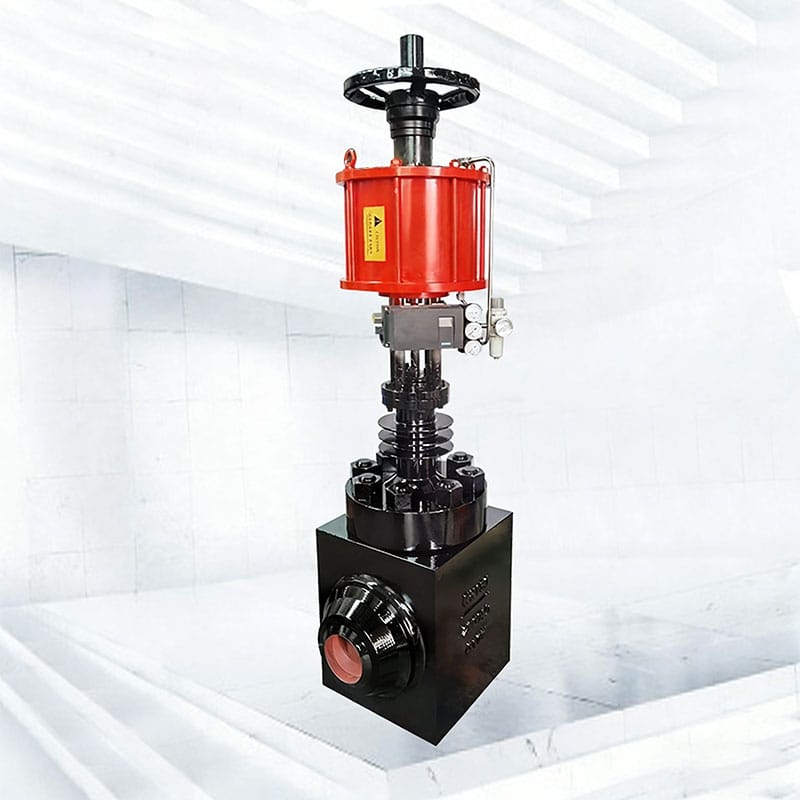
In control valve material selection, trim sees the highest velocity, pressure gradient, turbulence, contact stress, and cyclic motion. Plug, cage, seat, stem, and guides may need different materials or surface treatments. Review strength at temperature, erosion resistance, corrosion resistance, hardness, toughness, and the risk of galling between moving parts.
For control valve material selection, hardfacing, coatings, ceramics, or hardened alloys can extend life when the mechanism is understood. They can also introduce brittleness, cracking, porosity, coating-edge attack, or difficult repairs. Control valve material selection should define the substrate, treatment, thickness or hardness range where appropriate, application area, inspection method, and repair policy.
Do not use trim material to compensate for poor sizing. If the valve operates almost closed, cavitates continuously, or accelerates solids through a narrow restriction, geometry and staging may provide more improvement than a harder surface. Review the control valve trim selection guide alongside the material specification.
Soft Parts, Packing, and Gaskets Need Their Own Review
Control valve material selection for elastomers, polymers, packing, and gaskets must be evaluated separately from metal compatibility. Temperature, decompression, swelling, extraction, permeation, compression set, and fire behavior can determine suitability. Cleaning agents and lubricants may be more damaging than the normal process fluid.
For control valve material selection, specify seal compounds or performance requirements rather than color or a generic family. Confirm pressure-temperature range, fluid compatibility, shelf life, installation lubricant, oxygen-clean restrictions, and spare storage conditions.
Packing also affects actuator force and control quality. A chemically resistant packing arrangement may create higher friction than expected. Coordinate the materials review with the control valve packing selection guide and actuator calculation.
Avoid Hidden Material Pairing Problems
During control valve material selection, dissimilar metals can create galvanic corrosion when an electrolyte connects them. Hardness pairings can create galling even when each alloy is acceptable alone. Thermal expansion differences can change clearances, seat load, and guide contact as temperature changes.
A complete control valve material selection review checks material pairs, not only individual parts. Pay particular attention to stem-guide combinations, plug-cage contact, seat-retainer threads, coated surfaces, weld overlays, and fasteners near corrosive leakage paths. Avoid electrically isolating one interface without checking the entire conductive path.
Special Services Need Documented Controls
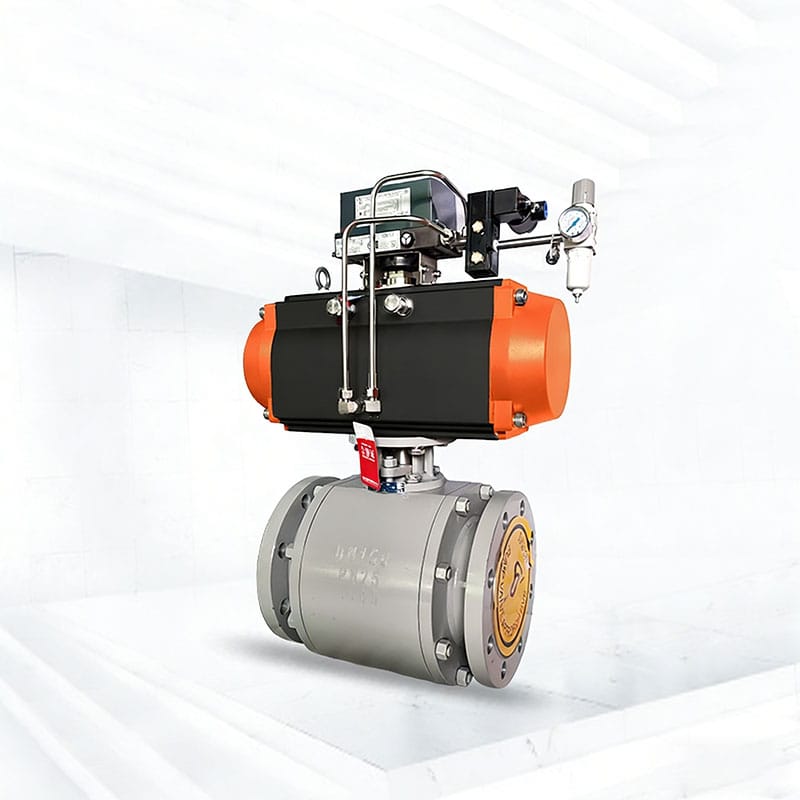
For control valve material selection, sour service, hydrogen, oxygen, chlorine, cryogenic fluids, high-purity service, and toxic emissions can impose special controls. These may affect hardness, heat treatment, cleanliness, ignition risk, permeation, impact toughness, certification, or inspection. Do not infer compliance from the base alloy name.
When a special standard applies, state the exact equipment scope and acceptance requirements. Useful authoritative sources include ISO 15156 information for sour environments and EIGA safety publications. Control valve material selection must follow the project’s qualified materials authority and latest contractual documents.
Liners and ceramics can isolate the pressure boundary from the process or resist abrasion, but continuity and mechanical support matter. Specify allowable defects, thickness, holiday testing where relevant, edge protection, thermal-shock limits, and replacement method.
Build a Service-Specific Material Matrix
| Component zone | Questions to answer | Typical evidence |
|---|---|---|
| Pressure boundary | Can it contain pressure at all temperatures and resist bulk corrosion? | Material specification, rating basis, heat and test records |
| Throttling surfaces | Will velocity, cavitation, flashing, or solids damage the surface? | Sizing review, hardness/treatment data, service history |
| Moving guides | Are hardness, finish, clearance, and pairing suitable? | Detail drawing, tolerances, inspection results |
| Seals and gaskets | Are fluid, temperature, decompression, and emissions compatible? | Compound data and qualification basis |
Use the control valve material selection matrix to record the selected material, exposure, damage mechanism, design justification, required test, and open question for each component. This makes control valve material selection reviewable by process, mechanical, inspection, and maintenance disciplines.
Verify Materials from Purchase Order to Final File
Control valve material selection verification starts with the purchase order. Require traceability appropriate to risk, including heat numbers, material certificates, positive material identification, hardness testing, coating records, or special-process qualifications when specified. More paperwork is not automatically better; each document should confirm a defined requirement.
During receipt and assembly, check that markings match certificates and drawings. PMI must use a documented procedure and calibrated equipment, and it may not distinguish every grade or condition. Control valve material selection acceptance should account for the limits of the chosen verification method.
Retain final bills of material, certificates, drawings, deviations, weld or overlay records, and inspection results. These records support future spares purchases and failure analysis, especially when external appearance cannot identify an alloy or treatment.
What to Include in the RFQ
- Complete fluid composition, concentration range, phase, contaminants, solids, pH, and water content.
- Minimum, normal, maximum, cleaning, regeneration, startup, shutdown, and upset conditions.
- Component-by-component material list, product form, grade, heat treatment, coating, or hardfacing.
- Applicable design code, corrosion allowance, low-temperature, special-service, and emission requirements.
- Required material certificates, traceability, PMI, hardness, impact, coating, and witness inspections.
- Approved deviations process, repair limitations, final documentation, and recommended material-matched spares.
For control valve material selection, ask every bidder to return the same material schedule and identify exceptions. Control valve material selection becomes much easier to compare when offers state exact grades and treatments instead of proprietary descriptions. For a project review, submit the service data through the contact page or review the control valve sizing guide for operating-case inputs.
Frequently Asked Questions
Is stainless steel always better than carbon steel for a control valve?
No. Suitability depends on fluid chemistry, temperature, pressure rating, chloride exposure, mechanical properties, fabrication, and cost of lifecycle failure. Some stainless grades can suffer localized cracking or corrosion in conditions where another material is more appropriate.
Can hard trim solve cavitation damage?
Harder trim may slow material loss, but persistent cavitation is primarily a hydraulic problem. Review valve style, pressure staging, outlet pressure, operating travel, and downstream piping before relying on a surface upgrade.
What is the difference between PMI and a material certificate?
A certificate reports properties and test results for a documented heat or lot. PMI checks composition on the actual component within the method’s limits. Critical service may require both traceability and direct verification.
Should body and trim use the same alloy?
Not necessarily. The pressure boundary and throttling parts face different stresses and velocities. Select each component for its function, then check galvanic compatibility, thermal expansion, hardness pairing, and maintainability.
When should a ceramic or lined valve be considered?
Consider these designs when corrosion or abrasion cannot be managed reliably with conventional metallic wetted parts. Verify thermal shock, pressure support, defect testing, impact risk, geometry, and replacement procedure.
Choose Materials from Evidence, Not Habit
Effective control valve material selection is a documented chain from process composition to component exposure, damage mechanism, exact material, verification method, and maintenance record. It avoids both under-specification and indiscriminate upgrades.
For control valve material selection, provide Phileda with the full operating envelope, fluid composition, solids, cleaning conditions, valve function, applicable standards, and documentation needs. That information supports a service-specific materials discussion and a quotation that can be compared on a clear technical basis.